
Zion Suzuki
Country: Japan
Age: 24
Club: Aston Villa
League: Premier League
Position: Goalkeeper
Major honours: 1 X AFC Champions League (Urwa red diamonds), 1 X Japanese Cup (Urwa red diamonds)
Club History: Urwa red diamonds, Sint Truiden, Parma, Aston Villa

PA Images | Alamy
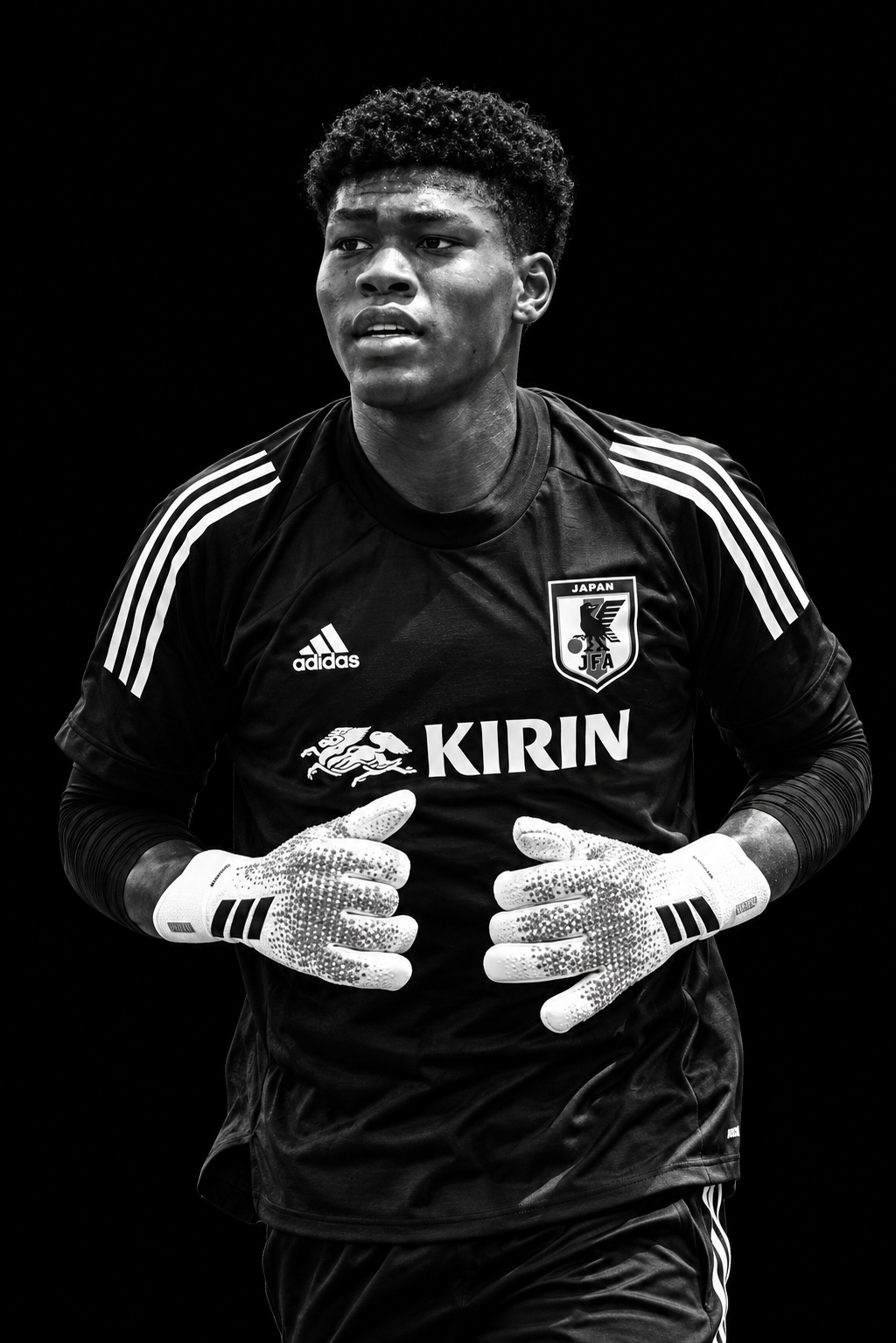
The football world's new "Wall": Zion Suzuki's journey from the Land of the Rising Sun to the heights of Birmingham.
When Zion Suzuki steps onto the pitch, the first things that catch your eye are his athletic build, steely gaze, and phenomenal ability to play with his feet. In modern football, a goalkeeper is no longer merely a guardian of the net—he is the first playmaker. It is precisely these qualities that made the Japanese goalkeeper a prime target for European clubs, ultimately leading him to the English Premier League.
Suzuki’s backstory is far more exotic than it appears at first glance. He was not born in Japan; he entered the world in Zion, New Jersey, USA. His father is Ghanaian, and his mother is Japanese. Although he spent his childhood in Saitama, Japan, this genetic blend endowed him with incredible physical attributes and phenomenal reflexes.
Few people know that, as a child, Zion never dreamed of being a goalkeeper. He played as a forward and loved scoring goals. During a youth tournament, the team's starting goalkeeper was injured, so the coach put the tallest boy Zion—in goal. That day, he saved several "impossible" shots, and his fate was sealed right then and there.
"When you send the ball precisely to a teammate's feet over a distance of 60 meters, it’s not just about technique—it’s about vision. Suzuki possesses a long-range passing ability that central midfielders would envy."
- Peter Schmeichel
"A modern goalkeeper needs the courage to control the ball inside his own penalty area. When I watch Suzuki play, I see a calmness that reminds me of my own youth. He has everything it takes to become a world-class star."
— Gianluigi Buffon
From Saitama to the European Arena
Suzuki’s professional career began at Urawa Red Diamonds, where he made a splash: at the age of 16, he became the youngest player in the club's history to sign a professional contract. His brilliant performances in the J-League soon attracted the attention of major European clubs.
In the summer of 2023, Manchester United made him an official offer. Most people would have accepted such an opportunity without a second thought, but Zion demonstrated remarkable maturity—he refused to sit on the bench at the English giant because he needed consistent playing time.
That is why he chose the Belgian club Sint-Truiden, where he became an indispensable first-choice goalkeeper. Following his experience in Belgium, Suzuki joined the Italian club Parma in 2024, becoming the first Japanese goalkeeper in Serie A history. Italian football instilled in him tactical discipline and a high level of proficiency in penalty-area play, paving the way to one of the world's top leagues—leading to his transfer to the English club Aston Villa.

The "Number One" of the Land of the Rising Sun's Team: Challenges and Recognition for the National Squad
Zion Suzuki's journey with the Japanese national team has not been easy or smooth, yet it was on the international stage that his true character shone through. Suzuki was always considered a key prospect in Japan’s youth national teams (ranging from U-15 to U-23), and he made his senior national team debut in 2022 at the East Asian Cup. Head coach Hajime Moriyasu immediately recognized in him the very quality that the Japanese school of goalkeeping had lacked for years: an ideal blend of European athleticism and Asian discipline.
The 2024 Asian Cup proved to be the biggest psychological test of Suzuki's career. Moriyasu placed his faith in the young goalkeeper, taking him to the tournament as the starter despite Zion still lacking significant international experience. Several errors made during the tournament sparked a real storm on social media. Suzuki became the target of racist attacks and harsh criticism. However, far from breaking under the pressure, the young goalkeeper demonstrated remarkable resilience. The national team coach and his teammates publicly defended him, while Zion himself proved that he is made of steel.

What has made Suzuki so sought-after by modern tacticians? The answer lies in his skills, which transcend the traditional confines of goalkeeping. Zion does not merely save shots; he acts as the primary architect of the team's attacks.
An "11th outfield player": his body balance and ability to deliver precise passes with his right foot completely neutralize the opponent's high press. When the opposition aggressively closes down the goalkeeper, Suzuki calmly controls the ball and executes a 40–50-meter diagonal pass directly to the winger's feet.
Standing over 190 centimetres tall and possessing African athleticism, he maintains complete control of the penalty area during corners and set-pieces. He does not wait for the ball on the goal line; instead, he boldly comes off his line and skilfully neutralizes the threat.
One of his key assets is his composure. Many young players struggle to overcome language and cultural barriers when moving to Europe, yet Zion demonstrated—during his time in Belgium and Italy—that communicating with defenders poses no problem for him.
World Cup Qualifying Stage and a New Era
After the Asian Cup, Suzuki returned to the national team completely transformed. He kept several clean sheets in World Cup qualifying matches and established himself as Japan's undisputed number one goalkeeper.
Japanese football legend and former national team captain Makoto Hasebe noted in an interview:
"Historically, the Japanese national team has always had technical and fast players on the pitch, but we lacked a goalkeeper who would strike fear into opposing strikers within the penalty area. Zion has changed this balance—he is the backbone of the team and a guarantee of composure."
Today, Zion Suzuki is the face of a new era—not only for Aston Villa but also for the Japanese national team. He is the first goalkeeper of colour to leave such a significant mark on the history of the "Samurai Blue," proving that modern Japanese football knows no boundaries.

Nippon News | Alamy
Written by Nini Giorgadze