
Mikel Merino
Country: Spain
Age: 30
League: Premier League
Club: Arsenal FC
Position: Midfielder
Club History: CA Osasuna, BVB Dortmund, Newcastle Utd, Real Sociedad, Arsenal FC
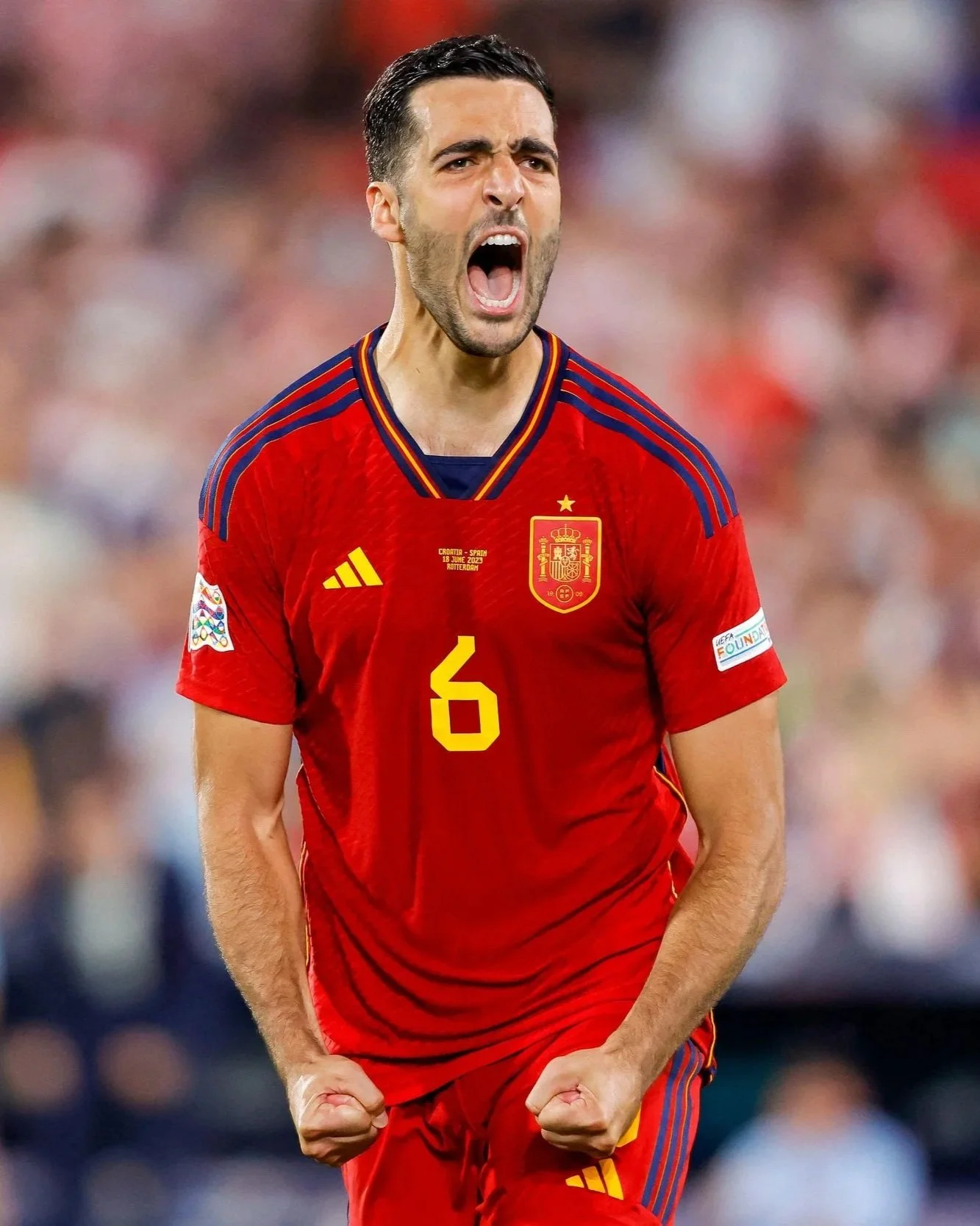
"When we look back at history, we realize that titles are won not by those who constantly seek the spotlight, but by those who shoulder responsibility in the most critical moments. Merino is exactly that kind of player—a quiet genius who defined his era."
Zinedine Zidane
Major Honours: 1 X EUROS (Spain), 1 X Nations League (Spain), 1 X Premier League (Arsenal FC), DFB Pokal, (BVB Dortmund), 1 X Copa Del Rey (Real Sociedad)
Michael Bulder | Alamy
A General Raised in the Shadows
In football, there are players who dominate the headlines and magazine covers, and then there are those who quietly decide the fate of a match from the centre of the pitch with geometric precision. Mikel Merino is an elite representative of this latter category. Before establishing himself as one of the smartest midfielders in European football, he had to carve out a path in an environment where character was often valued more than raw talent.
Mikel Merino’s footballing journey began in Pamplona at the Osasuna academy, though the true foundation was laid at home. Few are aware that Mikel’s father, Ángel Merino, was himself a legendary midfielder for Osasuna and Celta. Far from being overshadowed by his father during childhood, Mikel experienced the opposite: Ángel raised his son under extremely rigorous standards.
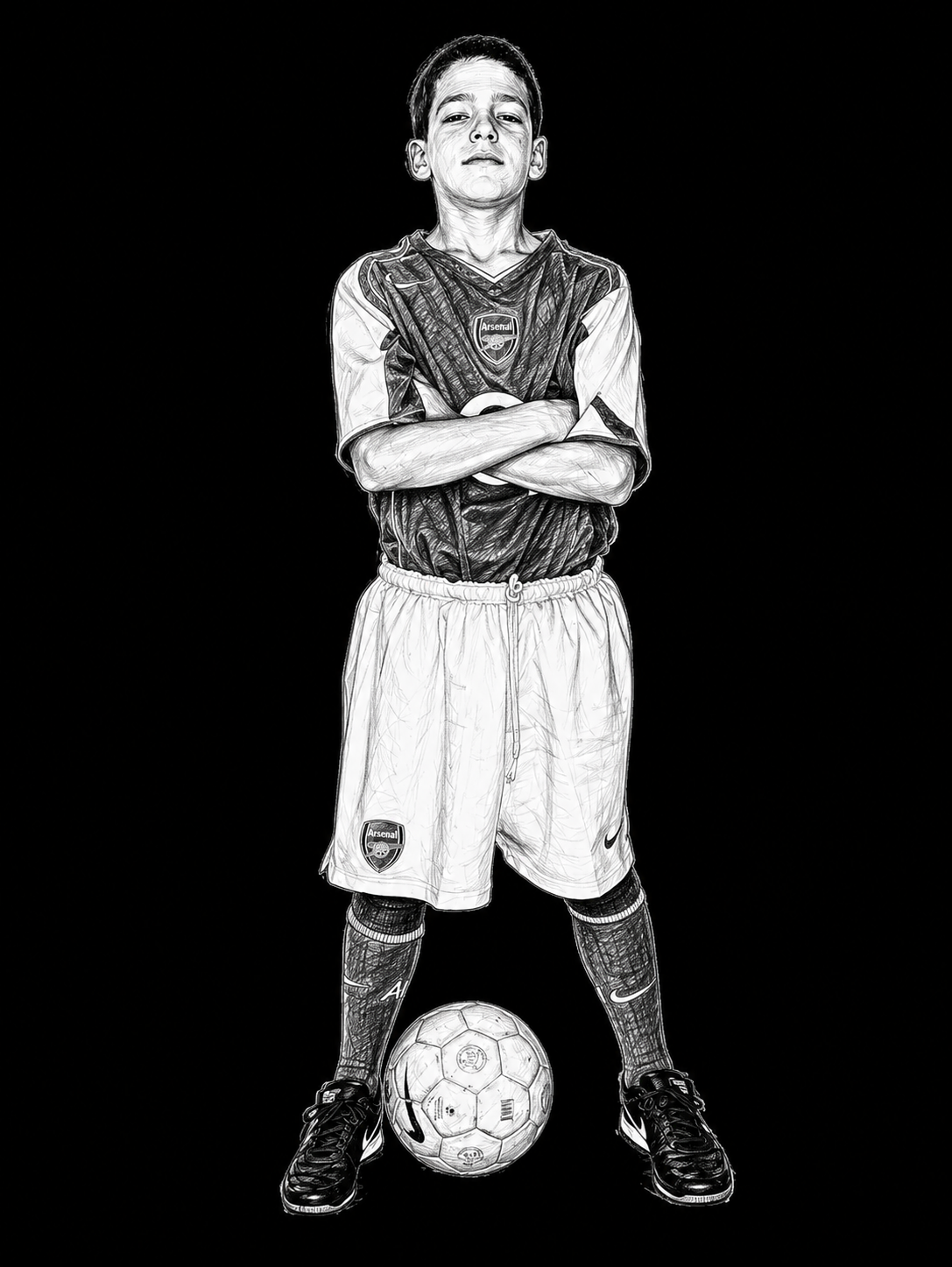
"In modern football, everyone looks for a midfielder who runs. But I always looked for the one who thinks before the ball reaches him. Merino is exactly that kind of player—he controls time and space on the pitch." Xabi Alonso
There was an unwritten rule in the family: his father never praised him after a good performance. If Mikel scored a goal, upon returning home, Ángel would point out only the positional errors he had made such as a mistake in the 40th minute of the match. It was precisely this "harsh" football upbringing that forged the unique quality in Merino that coaches today call his tactical genius: he learned to read the game long before he set foot in top-level football. In 2014, when he made his debut for Osasuna's first team, he was already thinking like a mature chess player.
When 20-year-old Merino moved to Borussia Dortmund in 2016, many believed he would become a new star under Thomas Tuchel. However, Germany proved to be a genuine existential test for him. Tuchel did not see him playing in central midfield and often even deployed him as a center-back. It is here that one of Merino’s lesser-known backstories emerges: during the bleak months in Germany, when he couldn't even make the matchday squad, Mikel refused to succumb to depression. He hired a personal analyst and spent sleepless nights studying how to contend with the physically imposing Premier League strikers in aerial duels.

He soon put this knowledge to use when he joined Newcastle United on loan in 2017. At St James' Park, Rafa Benítez saw what others had missed: an ideal blend of Spanish technique and British grit. The English press immediately dubbed him the "new Fàbregas," though Merino contributed far more in terms of the "dirty work" than Cesc ever did during his prime.
After a long journey, Merino found his true spiritual home at Real Sociedad in San Sebastián. Since 2018, he has become the backbone of the Basque club. It was here that he transformed from a "hard-working lad" into a true tactical monster. Statisticians frequently noted that Merino led all midfielders across Europe's top leagues in aerial duels won.
Merino developed a strange routine while playing for Sociedad: after every training session, he would stay on the pitch and discuss the anatomy of the club's goalkeepers to see which angles they had the most difficulty clearing. It wasn't just intuition, it was a scientific approach to football. The culmination came at the 2024 European Championship, where his golden goal against Germany propelled Spain to the final—a goal he celebrated exactly as his father had 33 years earlier at the same stadium.
"Playing in England often intimidates players because the pace here kills you. But Mikel moved on the pitch as if time slowed down around him. He has an amazing ability—to be aggressive while maintaining absolute elegance."
Cesc Fàbregas
"Merino is a player who makes life easier for the coach. He never loses his position; he senses where the danger lies. He is a true architect of the pitch who brings balance to the team."
Pep Guardiola

"In modern football, everyone looks for aesthetics, but Mikel gives you what is in shortest supply—balance and character. He is a midfielder whom any genius hates playing against."
Xavi Hernández
Mikel became the team's backbone a human metronome who, in 2021, led the club to its first title in decades: the Copa del Rey. He was no typical Spanish "number ten"; he was a fighter who won 80% of his aerial duels.
Over these years, Merino became a true symbol of Real Sociedad. While others garnered applause for their goals, Mikel was dominating the statistical charts: he emerged as one of the top midfielders across the "Big Five" leagues in terms of duels won. In 2023, he led the team to the Champions League, proving that they belong among Europe's elite. He became a player without whom Luis de la Fuente's Spain squad was unimaginable.
Everyone saw how Mikel celebrated the goal he scored against Germany—by circling the corner flag. Yet, few know that exactly 33 years earlier, in 1991, his father Ángel Merino had scored a goal for Osasuna in the UEFA Cup at that very same stadium (in Stuttgart) and celebrated in the exact same way. Mikel had watched that footage countless times during his childhood, and 33 years later at the most important moment of his career—he made that dream a reality.
Merino’s body seems to be made of iron. During one season at Real Sociedad, he played for nearly two months with a stress fracture in a vertebra. He kept the pain to himself, took painkillers, and still covered more ground than anyone else on the pitch, as the team had a chance to qualify for the Champions League.
Mikel is not the typical player who spends his free time solely on video games; he is passionate about tactical analysis and data science. During his time at Sociedad, he would often ask the club's analysts for heatmaps of his movements—not just after matches, but after routine training sessions as well—so he could calculate, with millimeter precision, exactly where he was losing time.
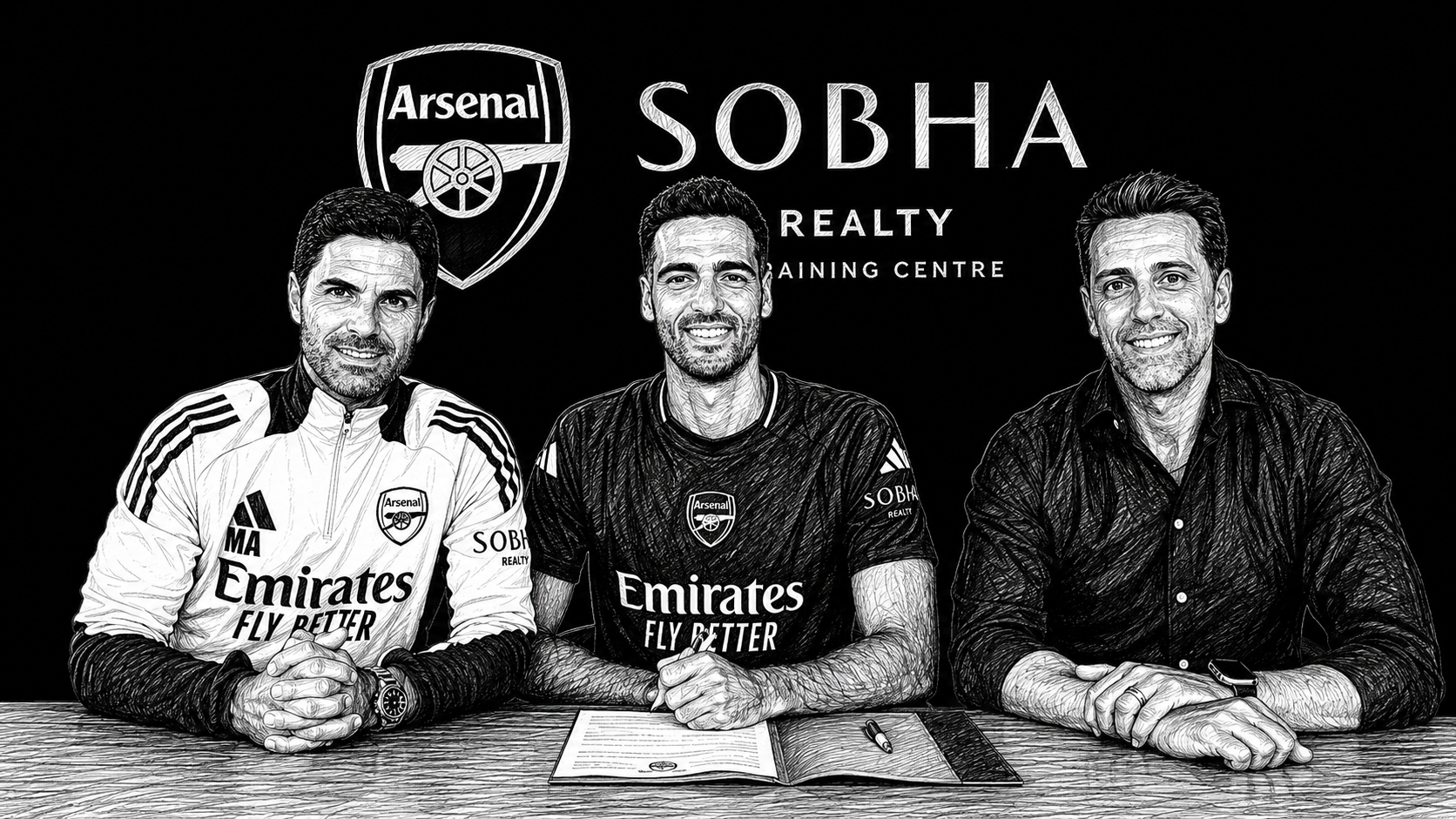
In August 2024, following lengthy and dramatic negotiations, the Basque midfielder signed a contract with Arsenal. Mikel Arteta saw in him the missing piece the Gunners needed in their fight for the Premier League title: physical dominance and tactical intelligence in the centre of the pitch.
However, his return to England got off to a nightmarish start: during his very first training session, Mikel fractured his shoulder in a collision with a teammate (Gabriel Magalhães) and was side lined for several weeks. Nevertheless, he quickly adapted to the London style of play. He formed a formidable partnership with Declan Rice, turning Arsenal's midfield into one of the toughest to break down in Europe. In the spring of 2025, as the season reached its climax, Merino was the very man controlling the tempo in the toughest Champions League knockout matches.
By the age of 29, he was no longer considered merely a "useful" player—he had entered that elite circle of world-class stars without whom top clubs could not function. The intensity of the Premier League further honed his physical attributes: Mikel became the league leader in aerial duels won and interceptions made inside the penalty area.
"He is incredibly intelligent. There are moments on the pitch when it seems he has no space, yet in a split second, he makes a decision that changes the entire game. He is the finest product of the Basque school."
Xabi Alonso
"He is the kind of player who makes a coach happy. He knows when to slow the game down, when to engage in a tough challenge, and how to defend space. With his arrival, the Londoners gained the steely character they had lacked in previous seasons."
Patrick Vieira

Throughout 2026 particularly when the team faced a shortage of classic strikers, Merino frequently appeared on the pitch as a so-called "nine-and-a-half" (target-man midfielder) or even a shadow striker. Thanks to his height, ability to shield the ball, and impeccable timing, he scored numerous crucial goals, becoming a key goal-scoring pillar for Arsenal.
The progress he made in this role made Merino even more indispensable to the Spanish national team. Luis de la Fuente now expected him not only to anchor the midfield but also to decide the outcome of matches. However, the hand of sporting fate is often cruel in the lead-up to major tournaments. Just as Mikel was in the best form of his career and preparing to contend for World Championship gold with the national team, a severe three-month injury all but shattered his plans. It was a mental and physical battle against time, where every single day was crucial.
"When you watch Merino on the pitch, you realize that being a forward isn't just about speed. He finds space as if the ball were waiting for him there in advance. His injury was a major blow, but people with his character always come back stronger."
Raúl González
The consistency he displayed at both Arsenal and with the Spanish national team earned him full recognition. He was no longer an unsung hero; by the summer of 2026, Mikel Merino had become a brand—synonymous with composure, class, and a superior footballing IQ.
It is often noted that Merino wins aerial duels as if he were the tallest player on the pitch, even though his height (189 cm) is by no means record-breaking. The secret lies in his family: his mother, Maite Zazu, was a professional basketball player. As a child, Mikel often trained with his mother, and it was from her that he learned the golden rules of the court: how to box out an opponent, how to judge the ball's trajectory, and how to time his jump perfectly. Football analysts remain amazed by his aerial balance, though Mikel himself always laughs and says that he plays on the football pitch using basketball rules.
"When we look back at history, we realize that titles are won not by those who constantly seek the spotlight, but by those who shoulder responsibility in the most critical moments. Merino is exactly that kind of player—a quiet genius who defined his era."
Zinedine Zidane

Amidst the grueling Premier League schedule, constant stress, and the pressures of London life, Mikel has found a unique way to mentally recharge—something unfamiliar to many stars. He is passionate about cooking, yet for him, it is no mere hobby; it is a rigorous, almost scientific process. Merino prepares traditional Basque dishes himself, approaching the process with the same precision he applies to match analysis. His London home is equipped with specialized scales and thermometers, allowing him to measure ingredients down to the milligram. Teammates recount that after tough matches—when adrenaline makes it impossible to sleep—Mikel heads to the kitchen and spends hours preparing Marmitako, a traditional Basque fish stew. The footballer himself says that controlling the temperature while cooking calms him just as much as managing the rhythm of the game on the pitch.

The three months Merino spent in the treatment room and rehabilitation centres proved to be a true test of his mental resilience. Many feared that, after such a long layoff, he would struggle to regain the intensity of the Premier League and the rhythm of the national team. However, the Basque returned to the pitch as if he had never been away. In his very first matches, he not only demonstrated his physical fitness but also managed to score decisive goals inside the opponent's penalty area, showing everyone that his footballing intelligence is stronger than any injury.
"I saw his return, and it was fantastic. When you’ve been out of action for three months and control the game like that from the very first minute, it means you are a top-level professional. He is a man who never panics in a crisis."
Xavi Hernández
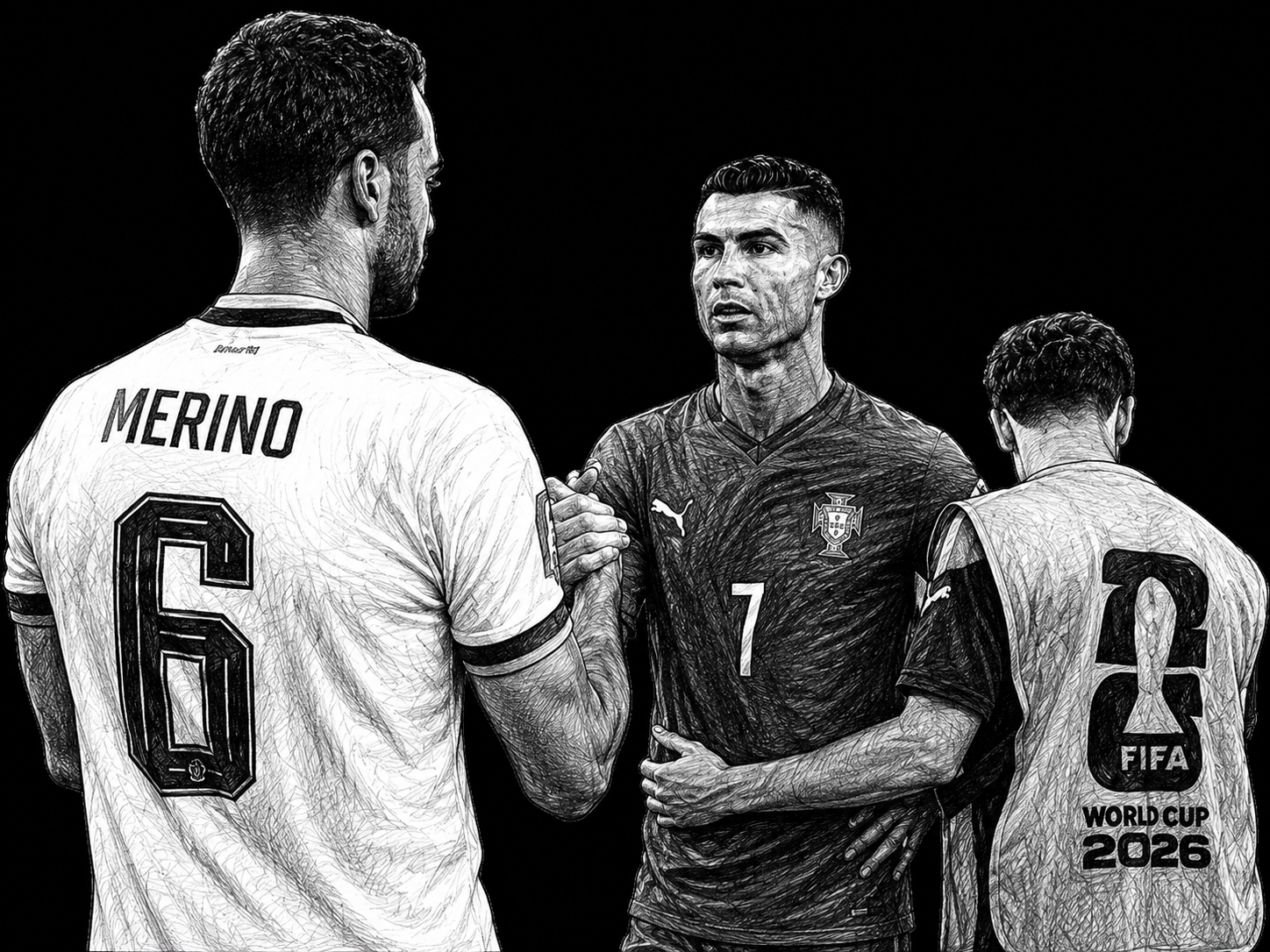
As Mikel Merino's Premier League gold medal glittered around his neck and the streets of North London chanted his name, one simple truth became clear: the most valuable currency in football is still time and control over it. Merino is not a player who plays for YouTube clips and viral social media trends. He is a man who sees the green field as a giant chessboard, Where every move and every leap are calculated with a basketball player's reflexes, and every clash with a rugby player's toughness.
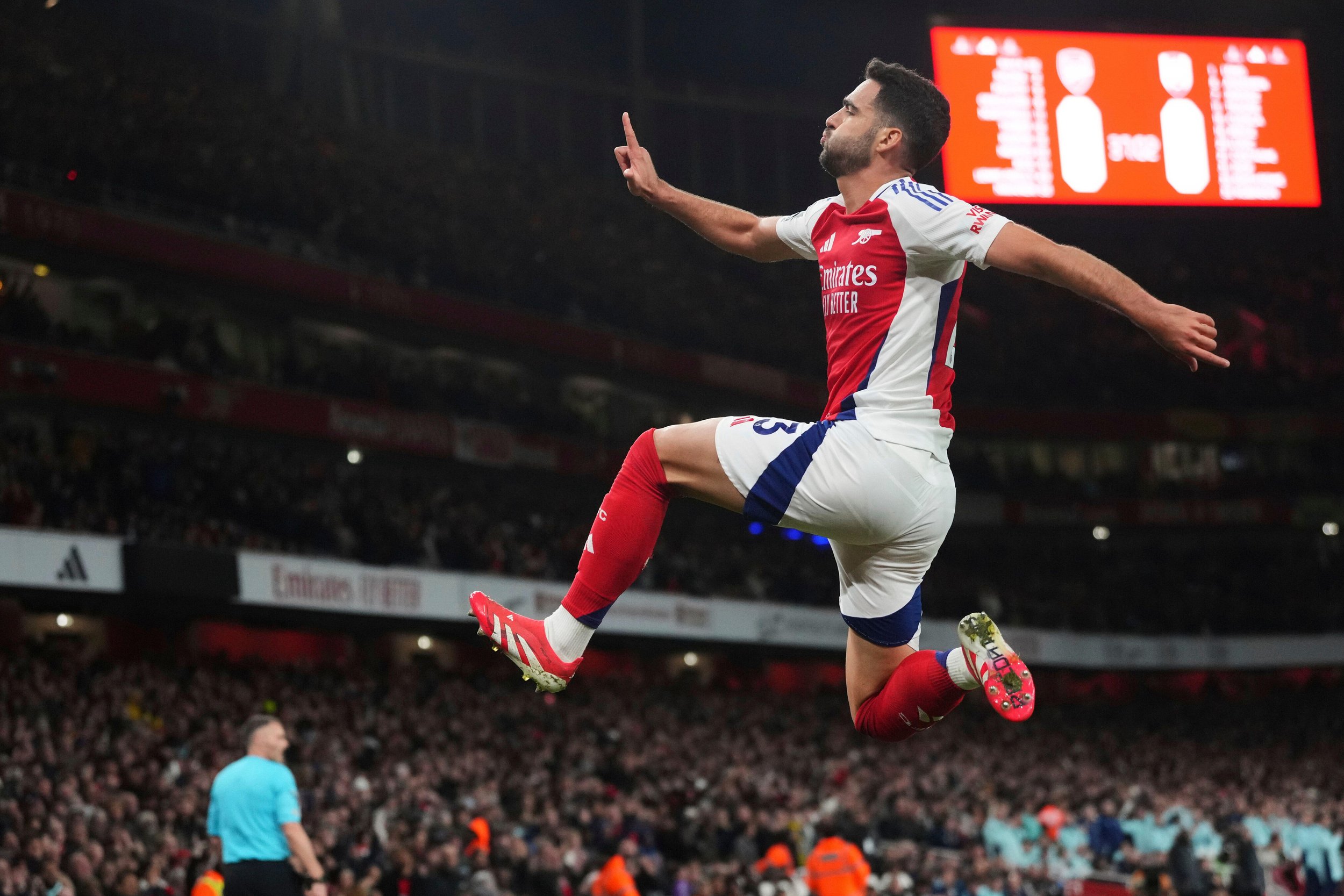
Kirsty Wigglesworth / Alamy Images
Written by Nini Giorgadze