
Martin Ødegaard
Country: Norway
Age: 27
Club: Arsenal FC
Position: Attacking Midfield
League: Premier League
Major Honours: 1 X Premier League (Arsenal FC), 1 X English Super Cup (Arsenal FC) , 11X Spanish Cup (Real Sociedad).
Club History: Strømsgodset, Real Madrid, Heerenveen (loan), Vitesse (loan), Real Sociedad (loan), Arsenal FC.
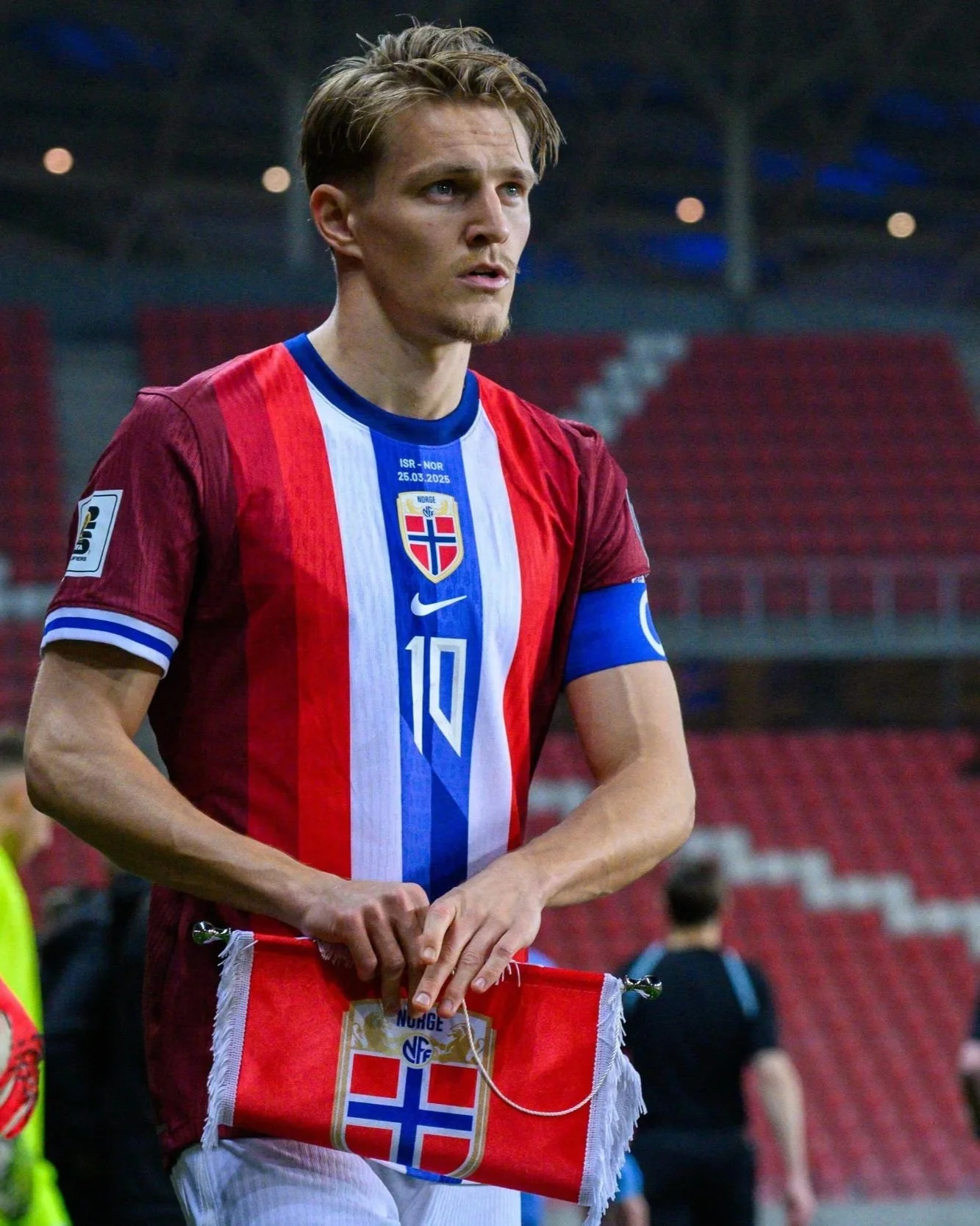
Conductor of the Football Symphony: How Martin Ødegaard Turned Pressure into Art
Sebo47 | Alamy
Martin shocked the football world when he made his debut for Strømsgodset at the age of 15 and soon became the youngest debutant in the history of the Norwegian national team.
Martin's father, Hans Erik Ødegaard, was a professional footballer himself. He devised a special training regimen for his son that involved 20 hours of practice per week. They often trained in snow and freezing temperatures on an artificial pitch, where Martin learned to make decisions in less than a second before physically stronger defenders could close him down.
In 2015, when all of Europe was vying for his signature, Ødegaard chose Real Madrid. However, establishing himself in the star-studded squad proved difficult. A series of loan spells followed—Heerenveen, Vitesse, and notably Real Sociedad, where he finally demonstrated his class in La Liga.
"Martin possesses a footballing intelligence that you cannot learn on the training pitch. He sees the game three moves ahead, like a chess grandmaster. In Madrid, he simply lacked time and patience." — Xabi Alonso
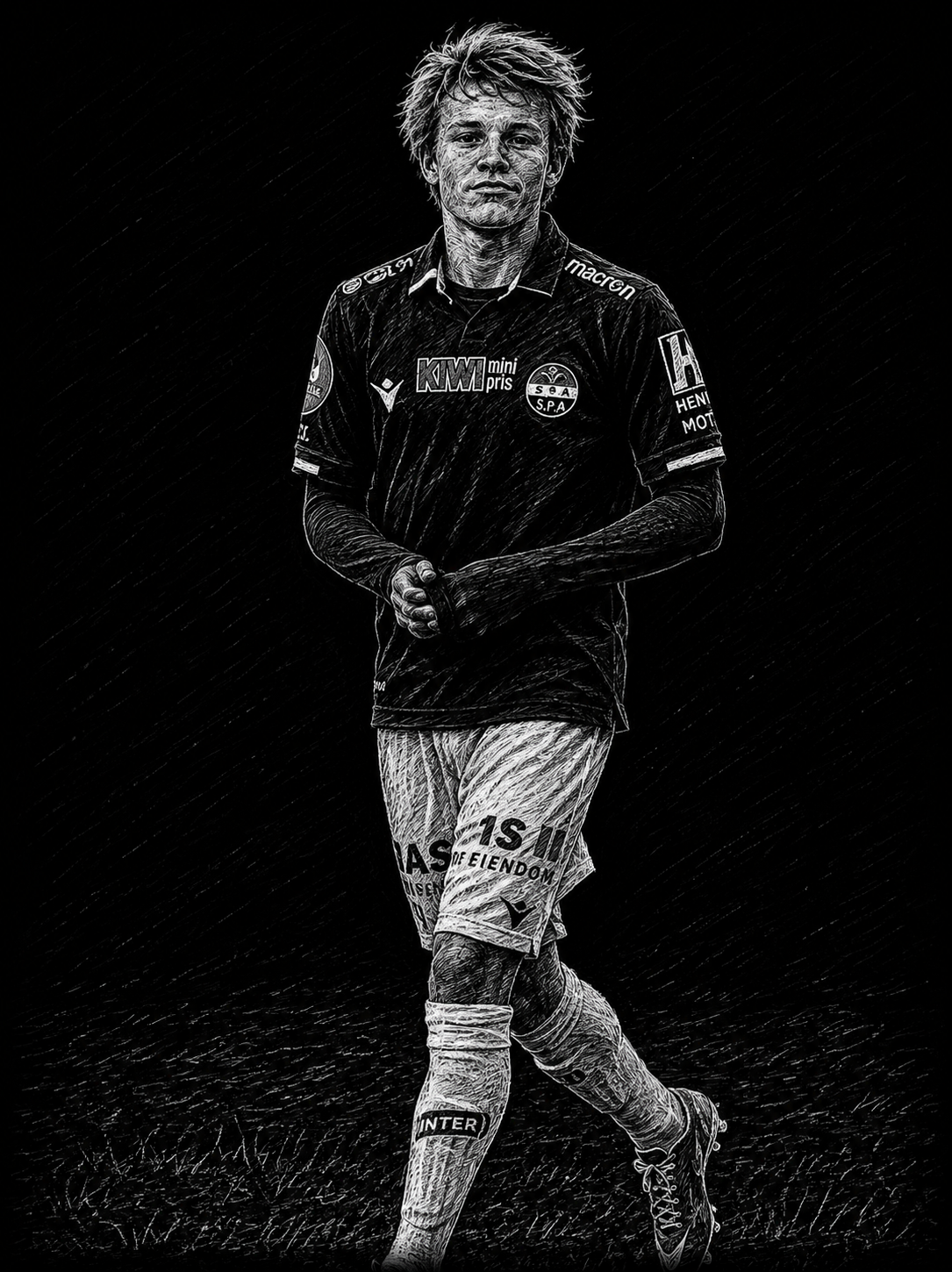
Before moving to Real Madrid, Martin—a lifelong, devoted Liverpool fan—had a trial at the Merseyside club. Brendan Rodgers was very keen to sign him, but the offer from the Spanish giants and the prospect of working with Zinedine Zidane (who was coaching Castilla at the time) proved decisive.
Martin struggled to adapt to a team with which he had not trained during the week. The coach at the time, Zinedine Zidane, faced a difficult choice: the club's management demanded that the wonderkid play, yet tactically, the youngster was still raw. In May 2015, he replaced Cristiano Ronaldo to become Real Madrid's youngest-ever La Liga debutant (at 16 years and 156 days old), but this was merely a beautiful façade.
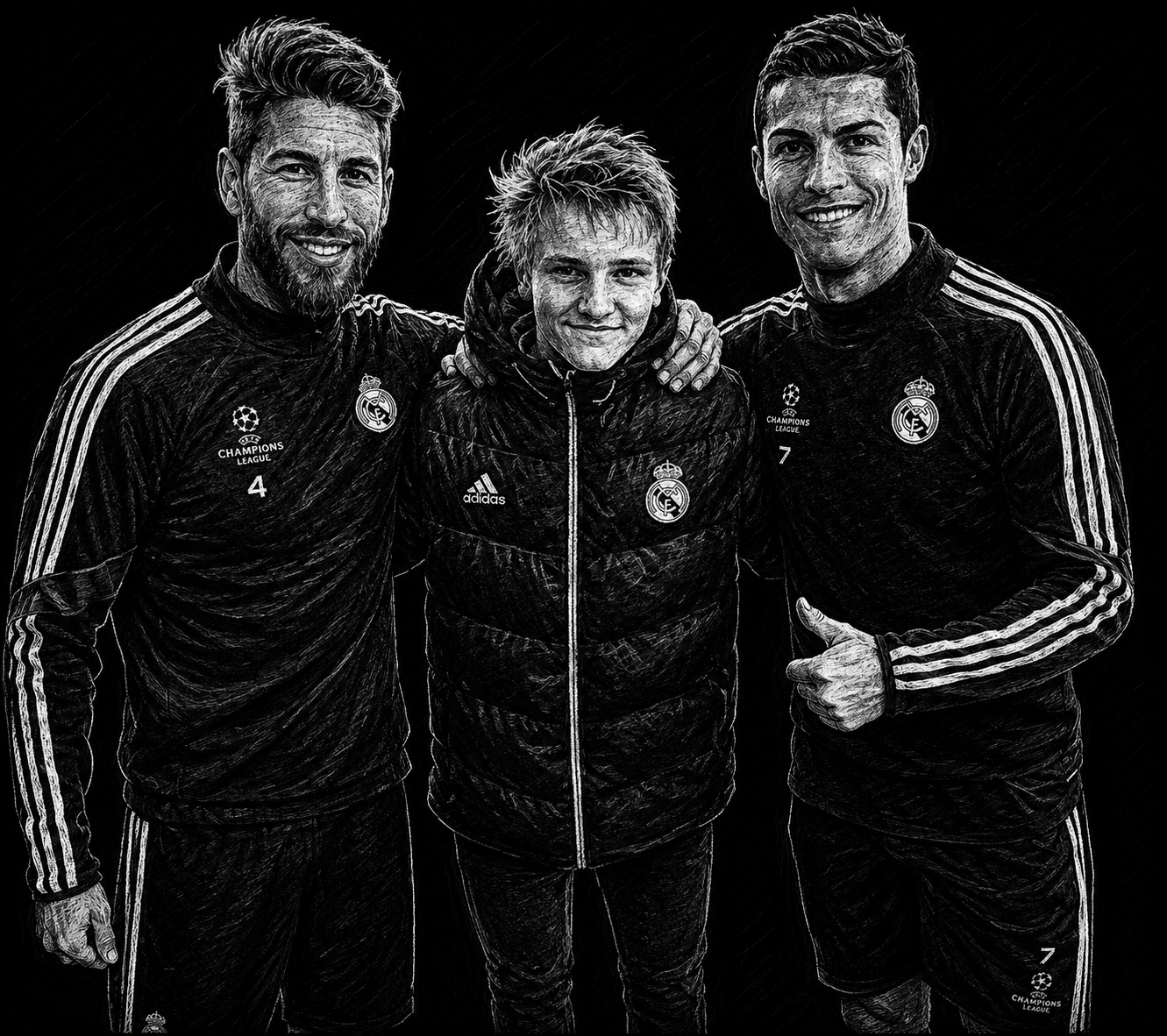
Martin initially found it very difficult in the Real Madrid dressing room, though one star took him under his wing in a special way: Cristiano Ronaldo. During training sessions, Ronaldo would often approach Ødegaard to offer encouragement; he even told the press at one point, "This boy has a great future—just give him time to grow." Despite this, Martin later recalled that the period was so psychologically taxing for him that he would sometimes go home and cry alone after training.
His 2019 loan spell at Real Sociedad proved to be a true masterpiece. At Anoeta, Ødegaard showed all of Spain why Pérez had paid millions for him; he became one of La Liga's finest playmakers. Ironically, it was thanks to Ødegaard's brilliant performance—and his goal—that Real Sociedad knocked Real Madrid out of the 2020 Copa del Rey.
"Florentino Pérez bought him for PR purposes. I wasn't interested in that transfer. He could have become the best, but I hadn't asked for him. It was a purely marketing-driven move." — Carlo Ancelotti (in his autobiography, which covers that specific period).
"Martin isn't special because he's talented, but because he works like crazy. When a player with that kind of talent runs the most on the pitch and engages in pressing, he is any coach's dream. He is ready to take on a leadership role." — Imanol Alguacil (Real Sociedad head coach).
Due to the progress he made at Real Sociedad, Zinedine Zidane personally requested Ødegaard’s early return to Madrid (the loan was originally intended to last two years). Martin returned full of hope, believing he would become Luka Modrić’s successor.
However, minor injuries sustained at the start of the season and Zidane’s blind faith in the Casemiro-Kroos-Modrić trio once again left Ødegaard glued to the bench. In five months, he started only three La Liga matches. Martin realized that in Madrid, he was always viewed merely as a "project"—not as a real, living footballer who needed the freedom to make mistakes. It was at this precise moment that a call from London came...
When Ødegaard decided to leave Madrid on loan in January 2021, Zidane met with him personally and asked him not to go, promising him playing time during the second half of the season. However, Martin firmly refused. He was so afraid of wasting another six months that he personally urged the club's management to expedite the transfer. It was the first time the quiet and reserved Norwegian showed real character and took control of his own destiny.
When Mikel Arteta first spoke to Martin by phone before the transfer, he didn't show the player tactical diagrams; instead, he asked how he was feeling after the pressure of Madrid. Arteta later admitted that he could sense such a strong hunger to play football in Ødegaard’s voice that, immediately after the call, he phoned Edu (the club's sporting director at the time) and said: "We can't let this guy slip away—he is our future."
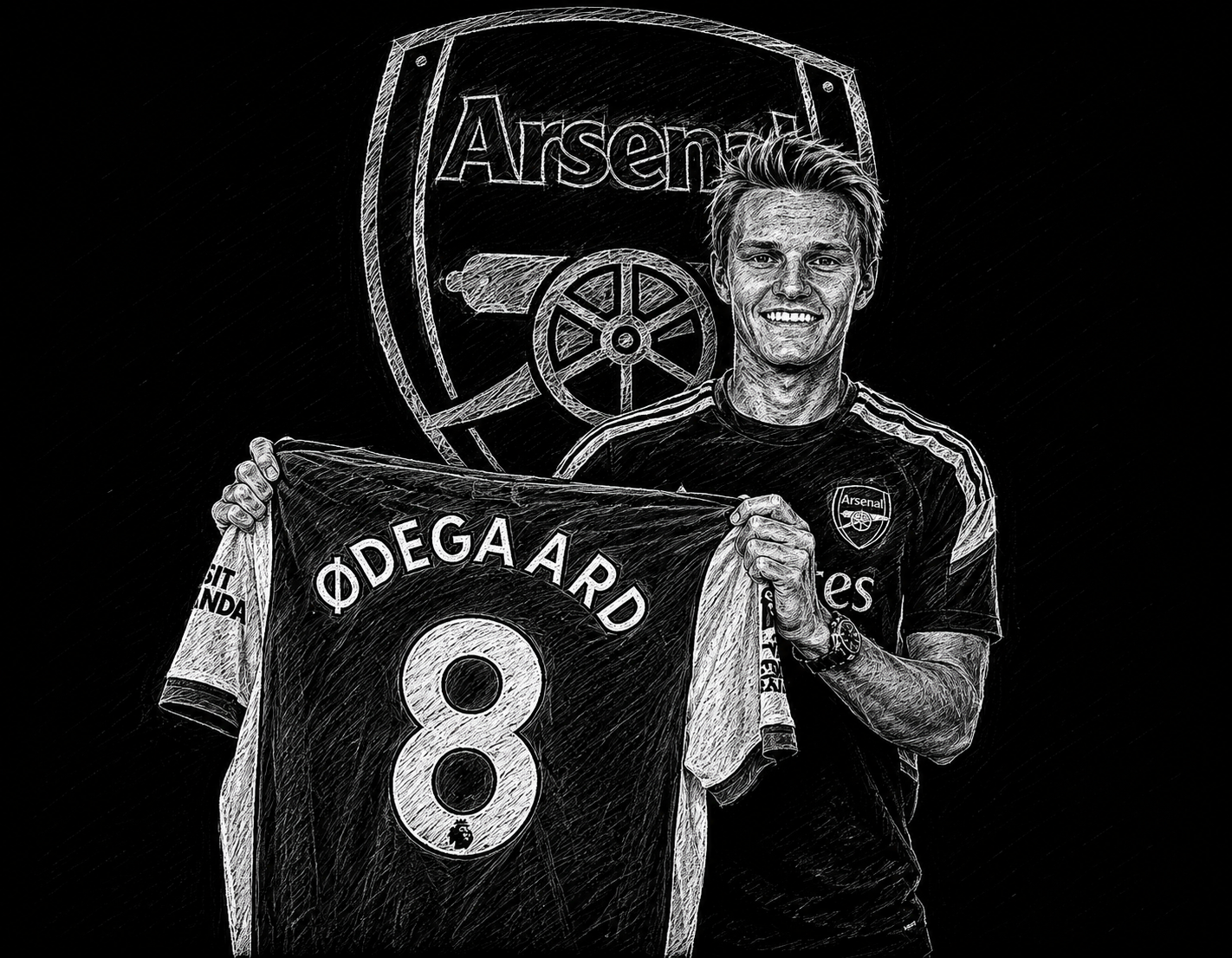
On January 27, 2021, Martin signed a loan deal with Arsenal. Many experts viewed the move with scepticism, predicting that Ødegaard would struggle to adapt to the physical nature of the Premier League. However, from day one, Mikel Arteta made the Norwegian feel that he was not merely a backup player, but a key piece of the team. Martin quickly secured a spot in the starting lineup and won the hearts of the fans with the goal he scored against Tottenham in the North London derby in March.
After his loan spell ended, he returned to Madrid, though Arsenal's management did everything they could to sign him permanently. The transfer was finalized in August 2021 for €35 million—a price that seems laughably low today when compared to the impact he has had on the team.
"In London, Martin found what every creative player needs—a home and absolute trust. Arteta gave him the keys and said: 'Play and run the show.' He knows exactly how to orchestrate the team's play, and he does it with such ease." — Cesc Fàbregas.
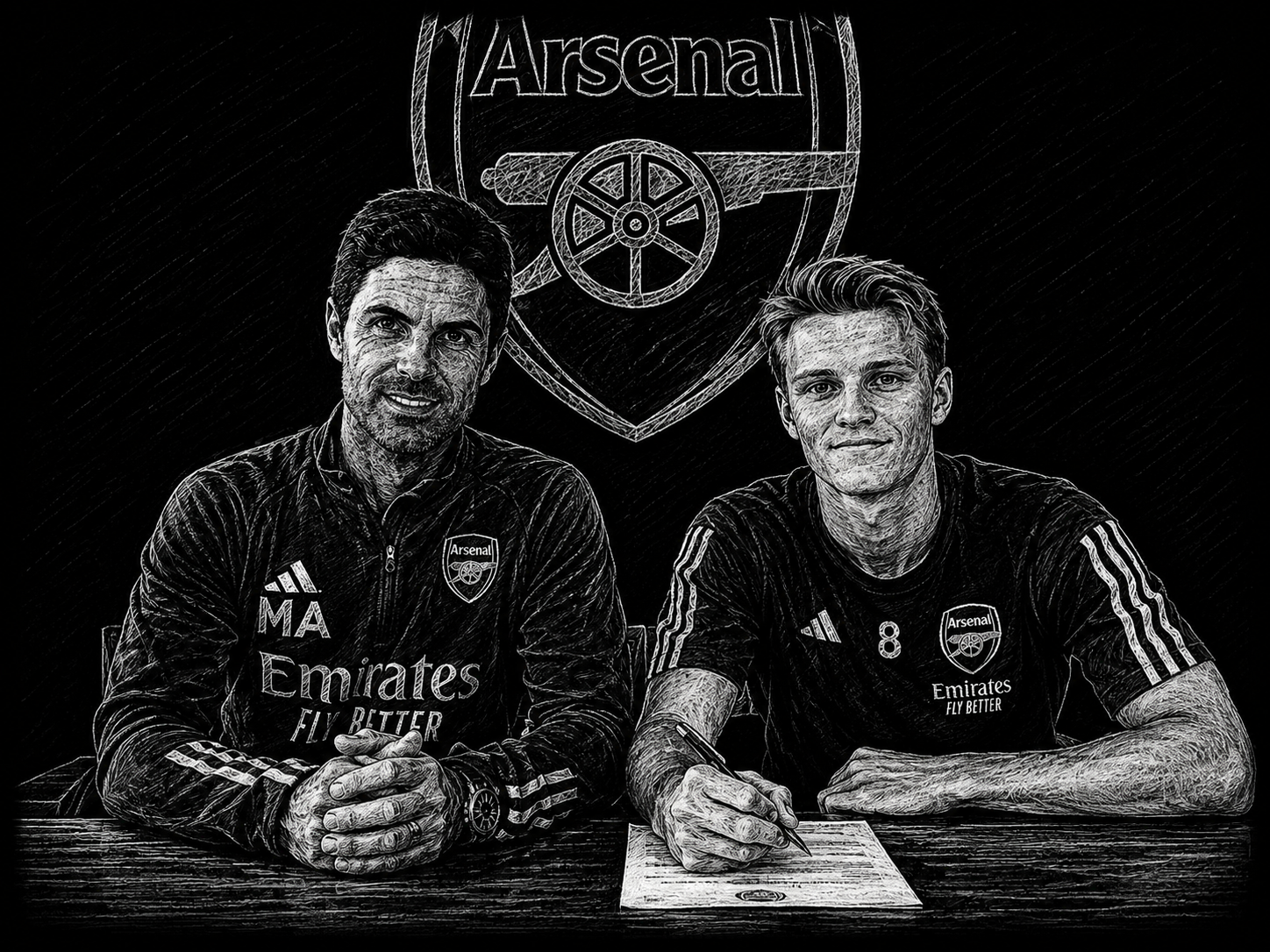
Ahead of the 2022/23 season, following Alexandre Lacazette's departure, 23-year-old Ødegaard became Arsenal's official captain. This marked a turning point in the club's history. Martin enjoyed a fantastic season, scoring 15 Premier League goals (all from open play, excluding penalties) and helping the team secure a return to the Champions League after a seven-year absence.
Ødegaard became the symbol of that young, hungry Arsenal side that went toe-to-toe with Manchester City in the title race. In 2023, he signed a long-term contract with the club, thereby committing his prime years to North London.
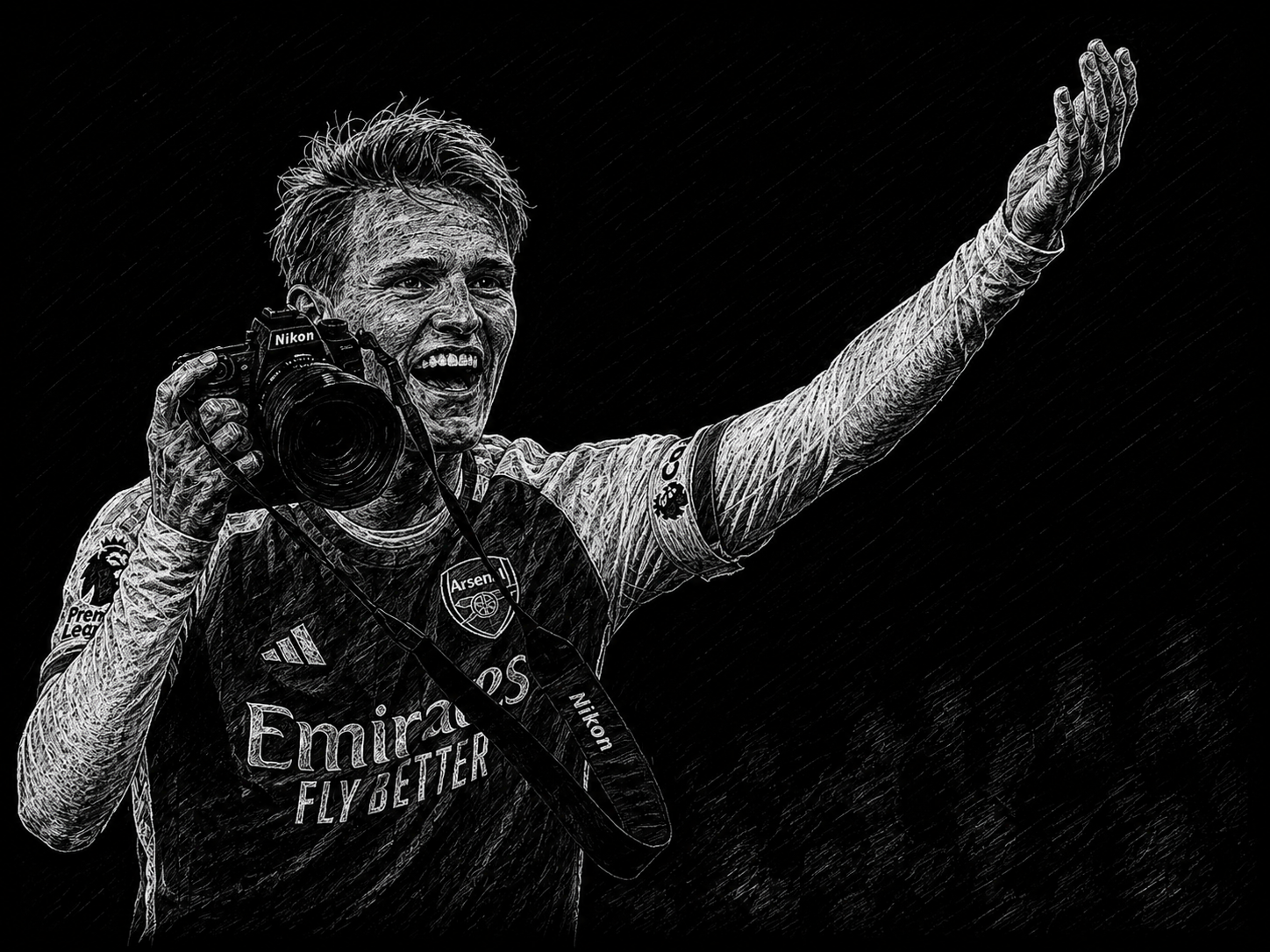
Over time, Ødegaard’s role at Arsenal has transcended the confines of a classic playmaker; he has become a direct extension of Arteta’s mind on the pitch. Tactically, Martin has learned to control the tempo of the game—knowing when to accelerate an attack with one-touch play and when to slow things down, allowing the team to catch its breath. His role became fundamental when initiating the press: it is precisely Ødegaard's initial movement that signals the entire team to start hunting down the opponent.
During this period, he proved capable of carrying the team even when Arsenal was facing a severe personnel crisis. His consistency was the reason the London club firmly established itself among the giants of European football.
Although he is a refined and composed gentleman on the pitch, Martin is quite strict about discipline in the dressing room. He personally ensures that, after every match, the players thank the fans who have traveled to away games. If anyone heads straight for the dressing room, the captain sends them back. Furthermore, he established a tradition in the dressing room where, after every victory, the team listens to a specific Norwegian song—one he made part of the club's culture.
"When I look at him, I see a player who has overcome his destiny. It is almost impossible to withstand the pressure he faced at the age of 16 and still reach such heights. Today, he is among the elite of European football." — Rio Ferdinand.
Arteta and Ødegaard stay at the training ground for two hours after sessions conclude, several times a week. In an empty room, using a large tactical board, they discuss not only the weaknesses of upcoming opponents but also how the team should handle the emotional side of things if a match takes an unfavorable turn. In an interview, Arteta admitted that Martin is the only player whose opinion he trusts 100% when it comes to altering tactical setups.
"He isn't the kind of captain who shouts on the pitch or gets into arguments with anyone. He leads by example—how he runs, how he fights in the press, and how he takes responsibility during critical moments of the match. He is the perfect captain for the modern Arsenal." — Thierry Henry.
Today, Martin Ødegaard is no longer a "former wonderkid." He is one of the best and most highly regarded "number tens" in world football. His playing style combines an incredible work rate—he often covers more distance than anyone else in a match—with surgically precise passing that dismantles any Premier League defense. He is the brain and heart of the team.
"People see his passes and goals, but I look at his work off the ball. He is the first defender, the first to press, and the first leader. Ødegaard is the kind of player around whom any coach would build a team to win the World Cup." — Patrick Vieira.
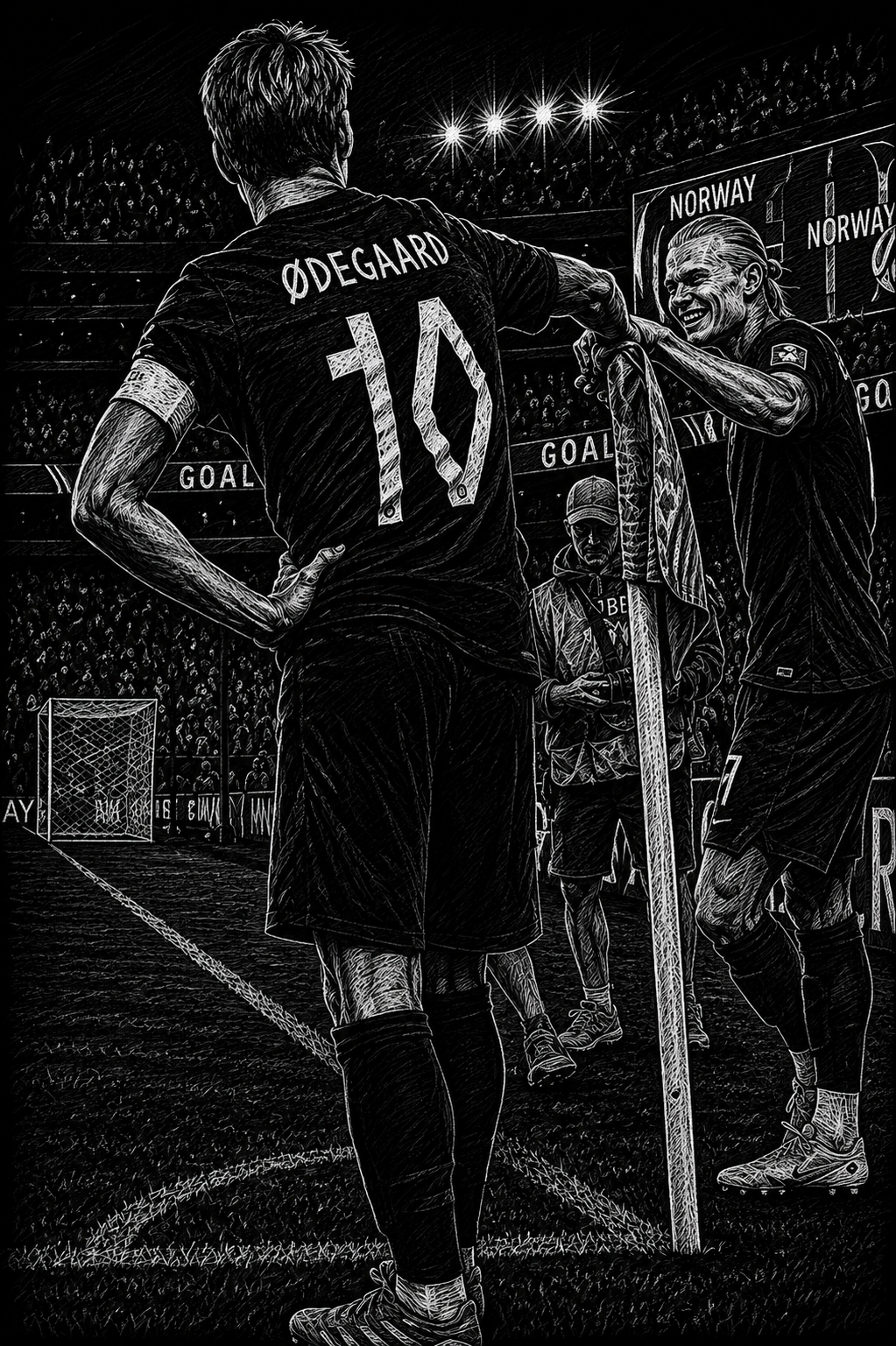
"Everyone talks about Haaland because he scores goals, but the real backbone of the Norwegian national team is Martin. Without him, Erling wouldn't get the ball. He is the catalyst who makes everyone around him 10% better." — Ole Gunnar Solskjær.
Martin’s story would be incomplete without his national team. Alongside Erling Haaland, Ødegaard has become a symbol of the hope needed to lift Norwegian football out of decades of stagnation. His role with the national team is even more demanding; lacking the star-studded midfield he enjoys at Arsenal, he must bring the ball out from deep, control the game, and simultaneously create chances for Haaland.
As the national team captain, he became a bridge between Norway's footballing past and future, shattering the stereotype that Northern Europe produces only physically strong and rugged players.
Although Ødegaard and Haaland have perfect chemistry on the pitch, their personalities are radically different. Haaland is flamboyant and boisterous, while Martin is quiet and introverted. Yet, during national team gatherings, it is Ødegaard who shoulders the brunt of media attention and pressure, allowing Haaland to focus undisturbed. Haaland even once jokingly said: "Martin is like an older brother to us in the national team; he calms us down when emotions are running high."
The phoenix that rewrote its own myth
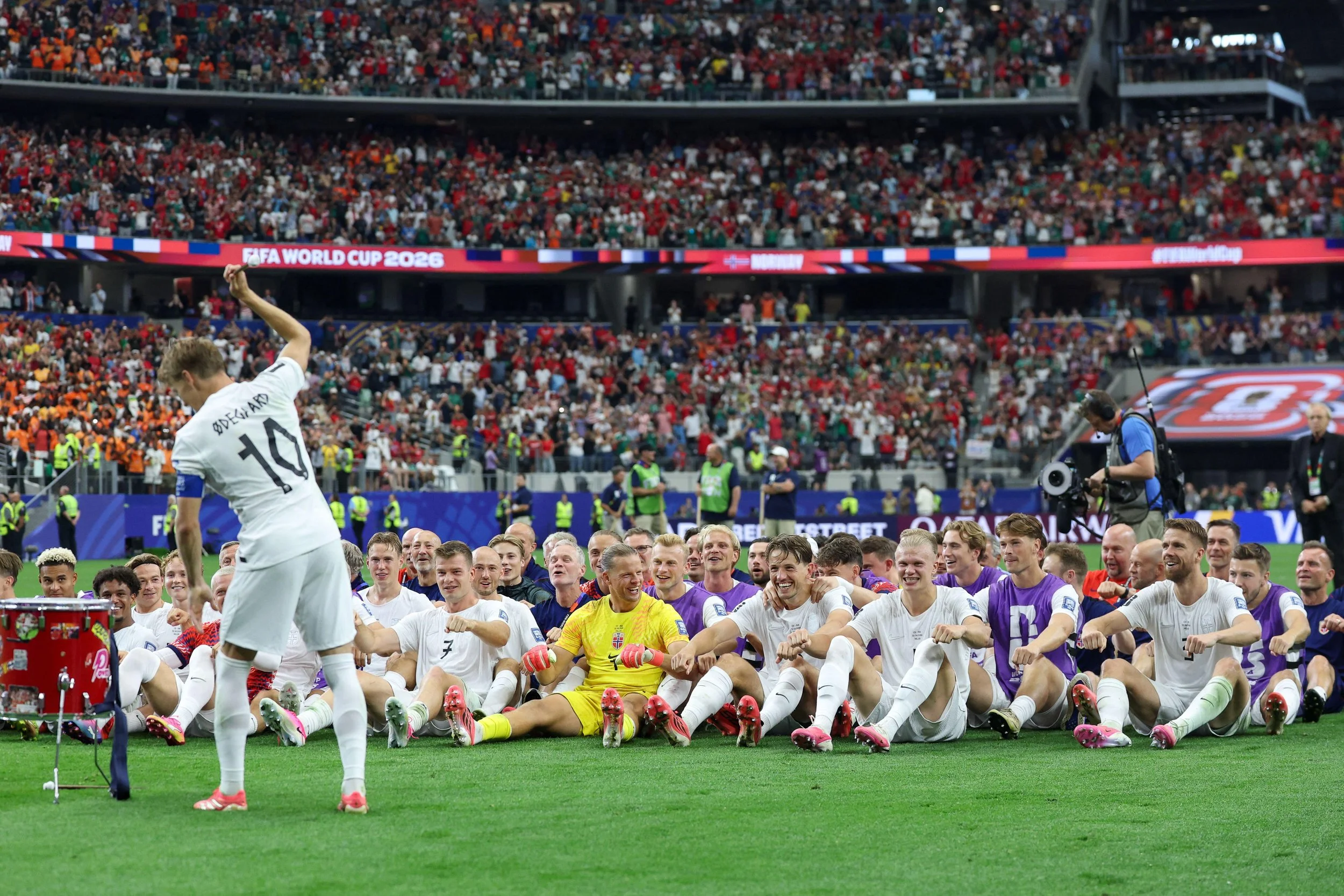
Action plus sports images | Alamy
The football world is full of tragic stories about wonderkids who could not withstand the weight of premature fame, money, and expectations. Martin Ødegaard also nearly became part of this sad statistic. At the age of 16, there was so much talk about him that people forgot the most important thing: he was still just a child who needed the freedom to make mistakes and grow.
His years in Madrid were a gilded cage where his talent was reduced to a mere project and a marketing tool. Yet, where others might have lost heart and faded into obscurity, the Norwegian displayed a Nordic character and a steely mentality. He did not choose the role of a victim; instead, he chose hard work, the arduous path of loan spells, and the process of rediscovering himself.
The move to Arsenal was no ordinary transfer—it was the meeting of two wounded ambitions. Mikel Arteta needed a leader for a new era, and Martin needed a home. Today, as Ødegaard mesmerizes the Emirates crowd with his footballing symphony, everyone forgets that he was once considered a talent who had "sunk" in Madrid. He is no longer a copy or a successor to anyone. He is Martin Ødegaard—captain, conductor, and a footballer who proved that even after the darkest night, the North Star always finds a way to shine in the sky.
Ødegaard’s story is not a story about football. It is the story of a boy who surpassed his own prophecy and turned pressure into art.
"The hardest thing in football is reinventing yourself when the whole world thinks they’ve already seen the best of you. Martin managed to do that. He didn’t become who we wanted him to be—he became better than anyone could have imagined." — Thierry Henry.
Written by Nini Giorgadze