
Lionel Messi
Country: Argentina
Age: 39
Club: Inter Miami
League: MLS
Position: Attacking Midfielder
Club History: FC Barcelona, Paris Saint Germain, Inter Miami
Major Honours: 1 X World Cup (Argentina), 2 X Copa America (Argentina), 4 X UEFA Champions League (FC Barcelona), 10 X La Liga (FC Barcelona), 7 X Copa Del Rey (FC Barcelona), 2 X Ligue 1 (PSG). 1 X MLS (Inter Miami)
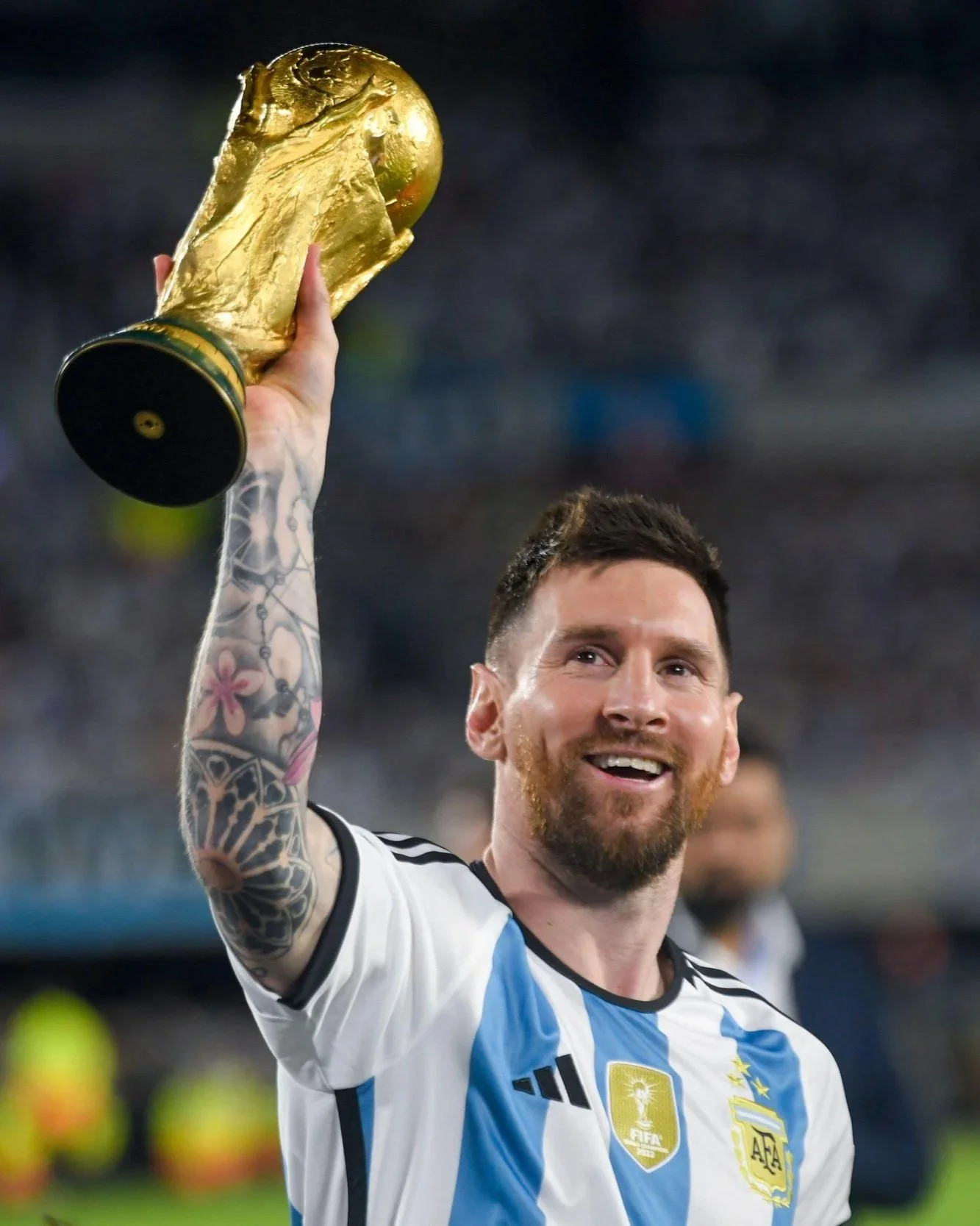
"When you saw him you would think: this kid can't play ball. He's a dwarf, he's too fragile, too small. But immediately you'd realise that he was born different, that he was a phenomenon."
— Newell's Old Boys youth coach Adrián Coria, sharing his first impression of the 12-year-old Messi
Gustavo Garello | Alamy
Some names outgrow their sport. Michael Jordan in basketball. Michael Schumacher in motorsport. Tiger Woods on the golf course. And then there is Lionel Messi — a category of one.
The story of a shy boy from Rosario who redrew the boundaries of what was possible in football, not by filling someone else's shoes, but by making everyone else want to fill his.
A Name Bigger Than the Game Itself
Lionel Andrés Messi was born on June 24, 1987, in Rosario, Argentina — the third child in a six-person family with Italian and Spanish roots, arriving into a country still glowing from its 1986 World Cup triumph in Mexico.
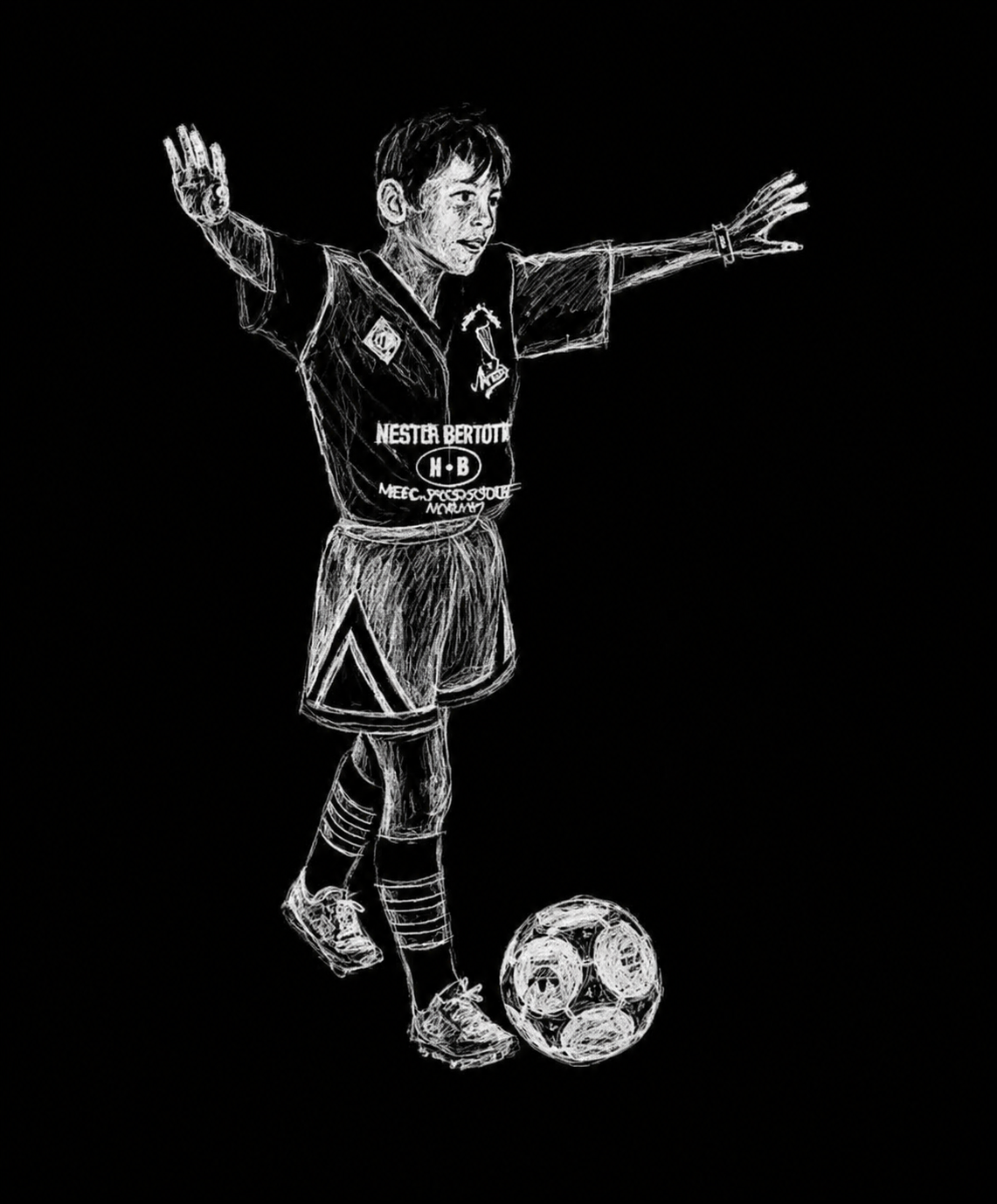
His early football was played at the local club Grandoli, coached by his own father. When his grandmother walked him to Newell's Old Boys training sessions, the reaction from those watching was always the same: how can a boy that size play football? The answer came the moment he touched the ball.
Rosario: The Boy Nobody Saw Coming
Barcelona: Rewriting the Record Books
Those early years carried real financial weight. Messi had been diagnosed with a medical condition requiring costly treatment, and the burden on his family was serious. Two clubs stepped forward: River Plate and Barcelona. His father had family ties in Catalonia, and Barcelona wanted him badly enough that their sporting director Carles Rexach committed to a deal on the spot — signing it on whatever was at hand.
He was thirteen years old. The decision was made.
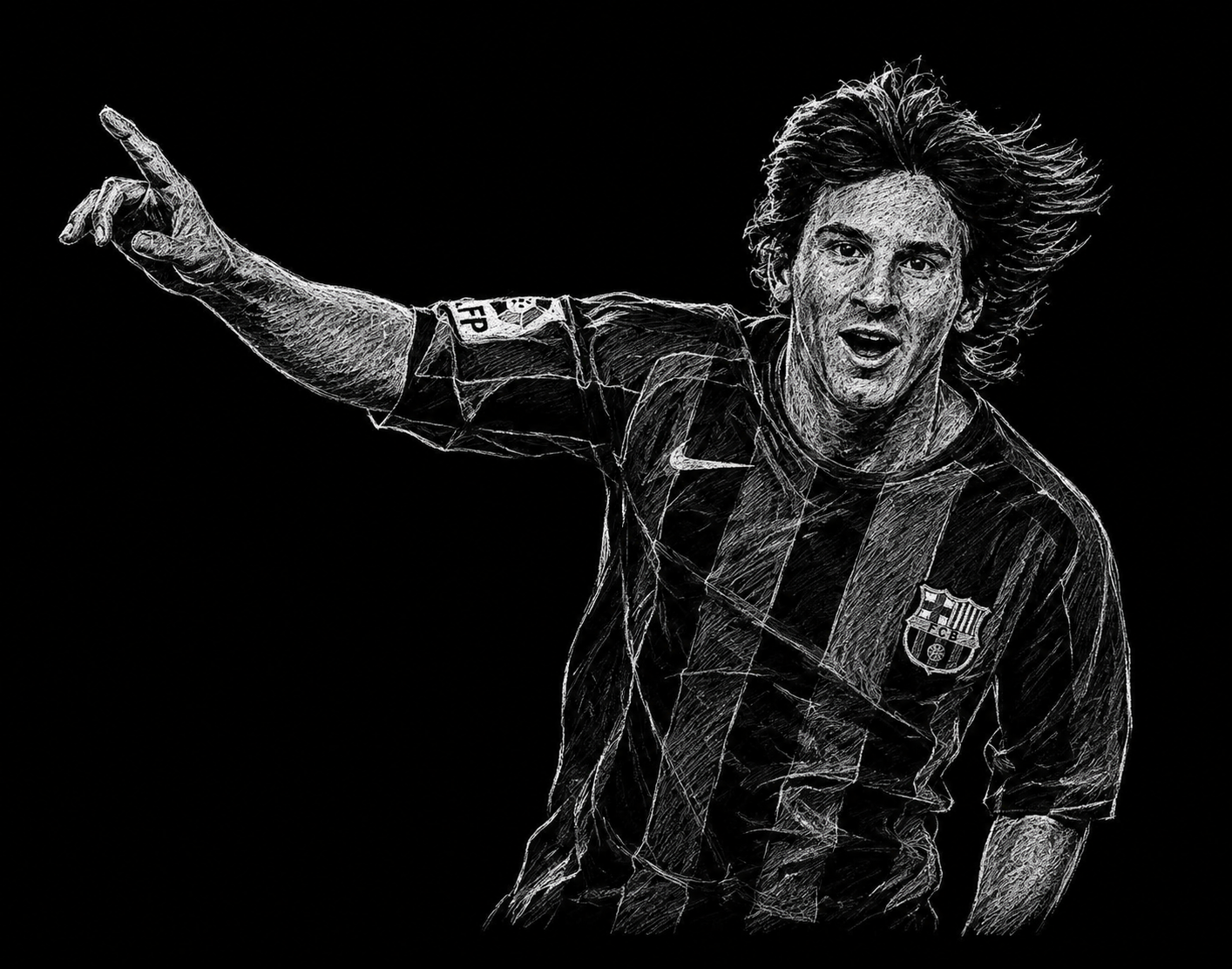
After coming through Barcelona C and B, everything accelerated. Frank Rijkaard handed him his first-team debut in 2004, and by the 2005/06 season, Messi was part of the side that lifted the first of four Champions League titles — alongside Ronaldinho and Samuel Eto'o. Three more followed under Pep Guardiola and Luis Enrique: in 2009, 2011, and 2015.
His first hat-trick in El Clásico against Real Madrid made him the first player in twelve years to achieve the feat in that fixture.
“I made sacrifices by leaving Argentina, leaving my family to start a new life. I changed my friends, my people. Everything. But everything I did, I did for football, to achieve my dream.”
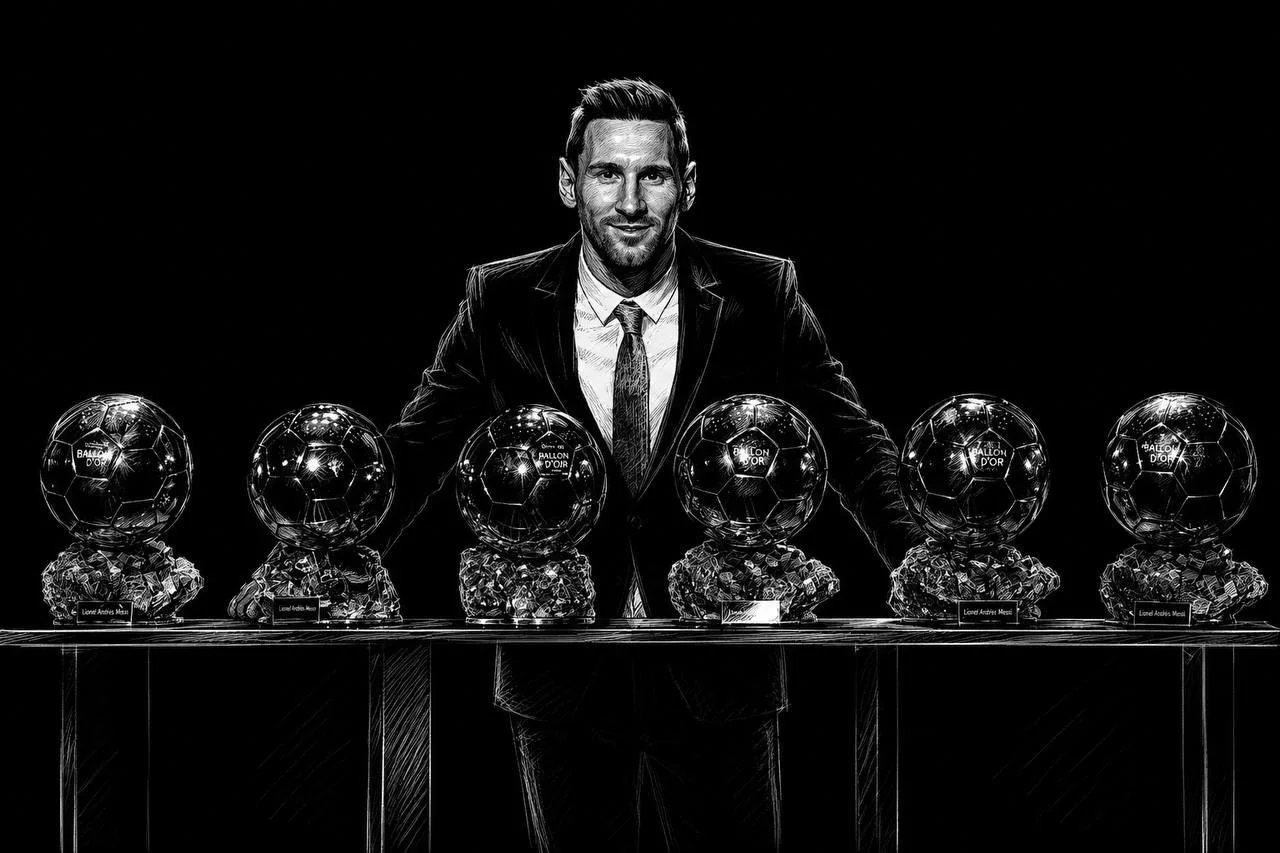
The arrival of Guardiola in 2008 marked a genuine shift. The tiki-taka machine that swept through La Liga and European football was built on a midfield triangle of Xavi, Iniesta, and Messi — three players who collectively added a new dimension to the sport. Between 2008 and 2012: four consecutive Ballon d'Or awards, four La Liga titles, two Champions League trophies, and performances in the biggest matches that left little room for debate.
He's the best [ever], there is no other like him. The numbers speak for themselves. One day he'll score six. We'll never see a player like him again.
We witnessed one of Messi's special nights tonight, it's a gift and I will always be able to say that I coached him.
- Pep Guardiola
In the 2012 calendar year, Messi produced one of sport's most statistically absurd achievements: 91 goals — 79 with Barcelona and 12 with Argentina — surpassing Gerd Müller's record of 85 from 1972. That fourth consecutive Ballon d'Or made him the first player in history to win it four times.
The MSN era of Messi, Suárez, and Neymar brought a treble in 2015 under Luis Enrique — Barcelona's most recent Champions League to date. Two further La Liga titles followed under Ernesto Valverde. But the final years in Catalonia lacked the competitive intensity of the peak era, and after seventeen seasons, financial regulations and a breakdown with the club's board ended the longest chapter of his career.
"We have had lots of memorable moments, also painful ones but the people's affection has always been the same. I have felt the recognition and the love that I also feel for the Club. Let's hope I can return at some point and help as best I can because this Club is still the best in the world."
When Messi chose Inter Miami in July 2023, reactions split between admiration and skepticism. The skeptics didn't last long.
He led Inter Miami to the Leagues Cup in 2023, and the Supporters' Shield in 2024 with an MLS record 74 points. Then in December 2025, Miami became MLS Cup champions with a 3-1 victory over Vancouver Whitecaps — Messi contributing two assists and being named the final's MVP. He finished the 2025 regular season with 29 goals and 19 assists, then added a record 15 goal contributions across the playoffs.
Mbappé, Neymar, Messi. Paris Saint-Germain assembled the trio in pursuit of their first Champions League title — and it never came. Two Ligue 1 titles and a French Super Cup were the sum of two seasons in Paris. By his own standards, a chapter written in pencil.
Paris: A Season Best Forgotten
Miami: Where Records Go to Be Broken
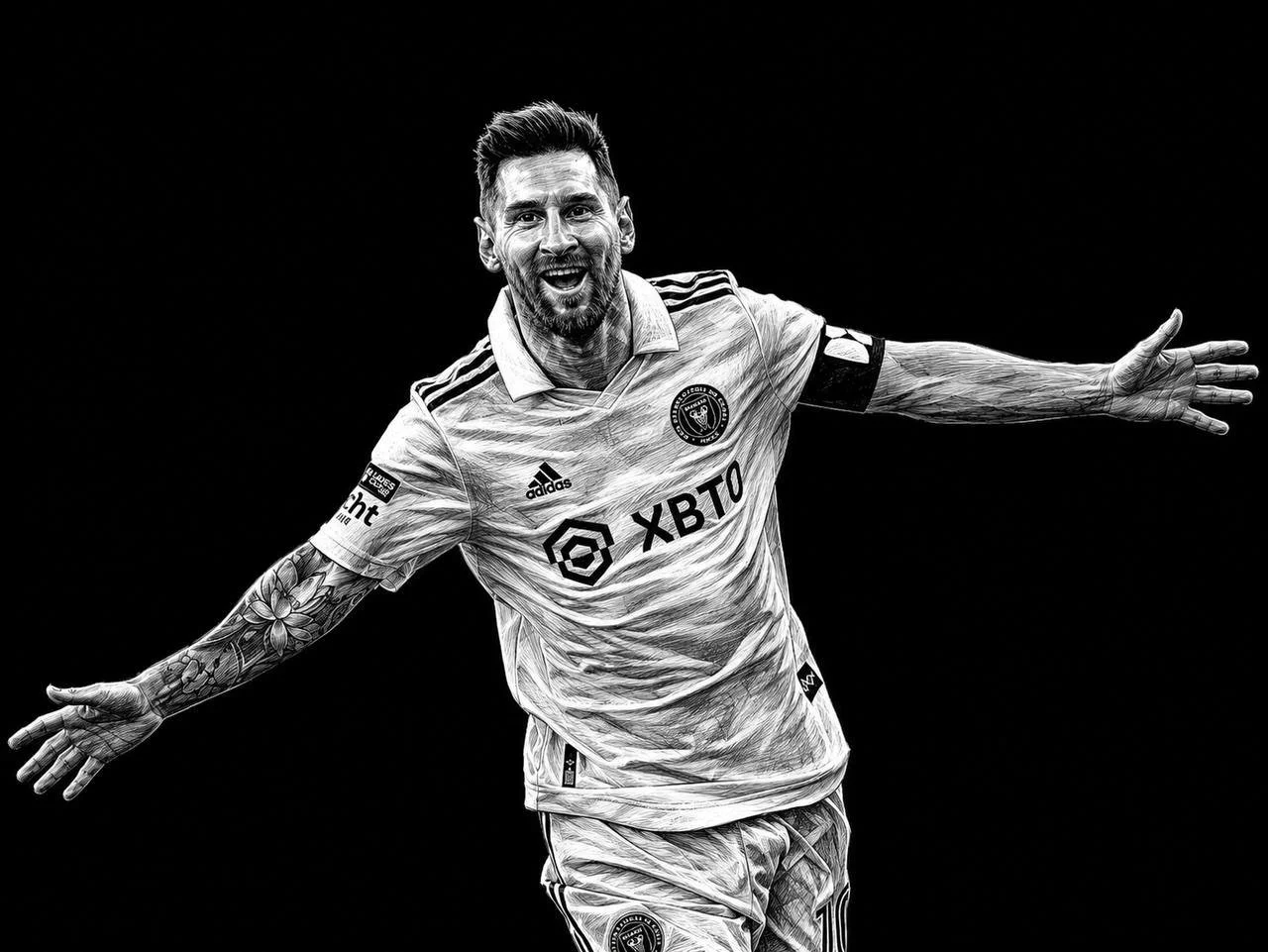
He became the first player in MLS history to win the MVP award in two consecutive seasons. Two Ballon d'Or awards arrived after his so-called peak years at Barcelona — proof, if any was still needed, that he was never dependent on a system. In Miami, he made the point clearly: the teammates need Messi, not the other way around.
When he made his senior Argentina debut in 2005, and the early World Cup campaigns ended in disappointment, the criticism was consistent: brilliant for Barcelona, not enough for the national shirt. The 2010 tournament under Diego Maradona ended badly. In 2014 in Brazil, one goal — Mario Götze's extra-time winner for Germany — stood between him and the trophy. Russia 2018 brought a last-sixteen exit against France, the eventual champions.
Argentina: The Long Road to the Top of the World
The shift came at Copa América 2021, when Argentina ended a 28-year trophy drought by beating Brazil in the final. The 2022 Copa América title defence followed. And in Qatar, in one of the most dramatic finals in the tournament's history — 3-3 against France, won 4-2 on penalties — Argentina claimed their third World Cup and Messi his only one. He won the Golden Ball. The chapter that had long felt incomplete was finally closed.
I've seen the player who will inherit my place in Argentinian football and his name is Messi. He is beautiful to watch—my kind of player in our blue and white jersey. He's a leader and is offering classes in beautiful football. He has something different to any other player in the world.
-Diego Maradonna
Now at the 2026 World Cup on home soil across North America, Messi has continued where Qatar left off. His tally stands at 20 World Cup goals across six tournaments — the all-time record in the history of the competition, men's or women's. A hat-trick against Algeria in the group stage equalled Miroslav Klose's men's record of 16, before a brace against Austria broke it — surpassing Klose and then Marta's overall mark of 17 in the same game.
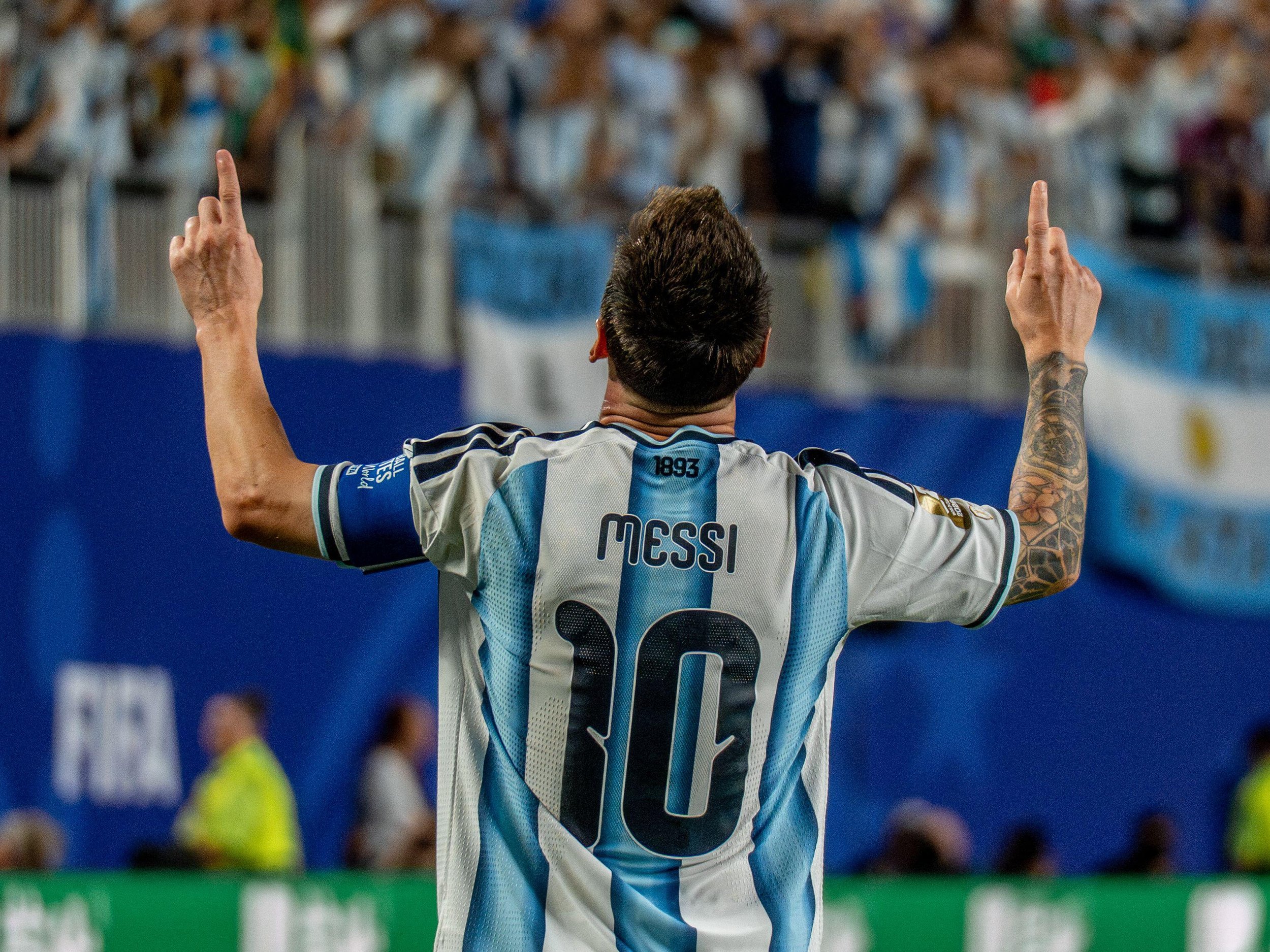
Mariela Mas / Alamy Images
Argentina arrive in the knockout rounds as defending champions. For Messi, this tournament — played in the country where his club career found its final chapter — carries its own particular weight. The numbers suggest there is still more to write.
The boy from Rosario never needed to be the next Maradona. He became something the game had never quite seen before — and is still seeing now.
I've never stopped being Argentine, and I've never wanted to. I feel very proud of being Argentine, even though I left there. I've been clear about this since I was very young, and I never wanted to change. Barcelona is my home because both the club and the people here have given me everything, but I won't stop being Argentine.
Written by Daniel Dar