
Leah Williamson
League: WSL
Age: 29
Club: Arsenal
Country: England
Position: Centre back
Club History: Arsenal Women
Major Honours: 1 X Women’s Champions League (Arsenal), 4 X Women’s League Cup (Arsenal), 1 X Women’s Super league (Arsenal), 2 X Women’s FA Cup (Arsenal), 1 X FIFA Women's Champions Cup (Arsenal), 2 X UEFA Women’s EURO’S (England)
“I was brought up never to expect people to say no to me… Mum and Grandma were strong independent women who just smashed any barrier that was in their way.”
- Leah Williamson
Zuma Press | Alamy
The Heart of England: Leah Williamson’s Remarkable Journey from Arsenal’s Academy to Captaining a Nation
There are footballers who inspire through goals and trophies, and there are those whose influence reaches far beyond the game itself. Leah Williamson belongs to the latter. Composed, intelligent and an exceptional leader, she has become the face of a new generation of English football. As captain of England and Vice Captain of Arsenal Women, Williamson has helped redefine what leadership looks like, inspiring millions both on and off the pitch.
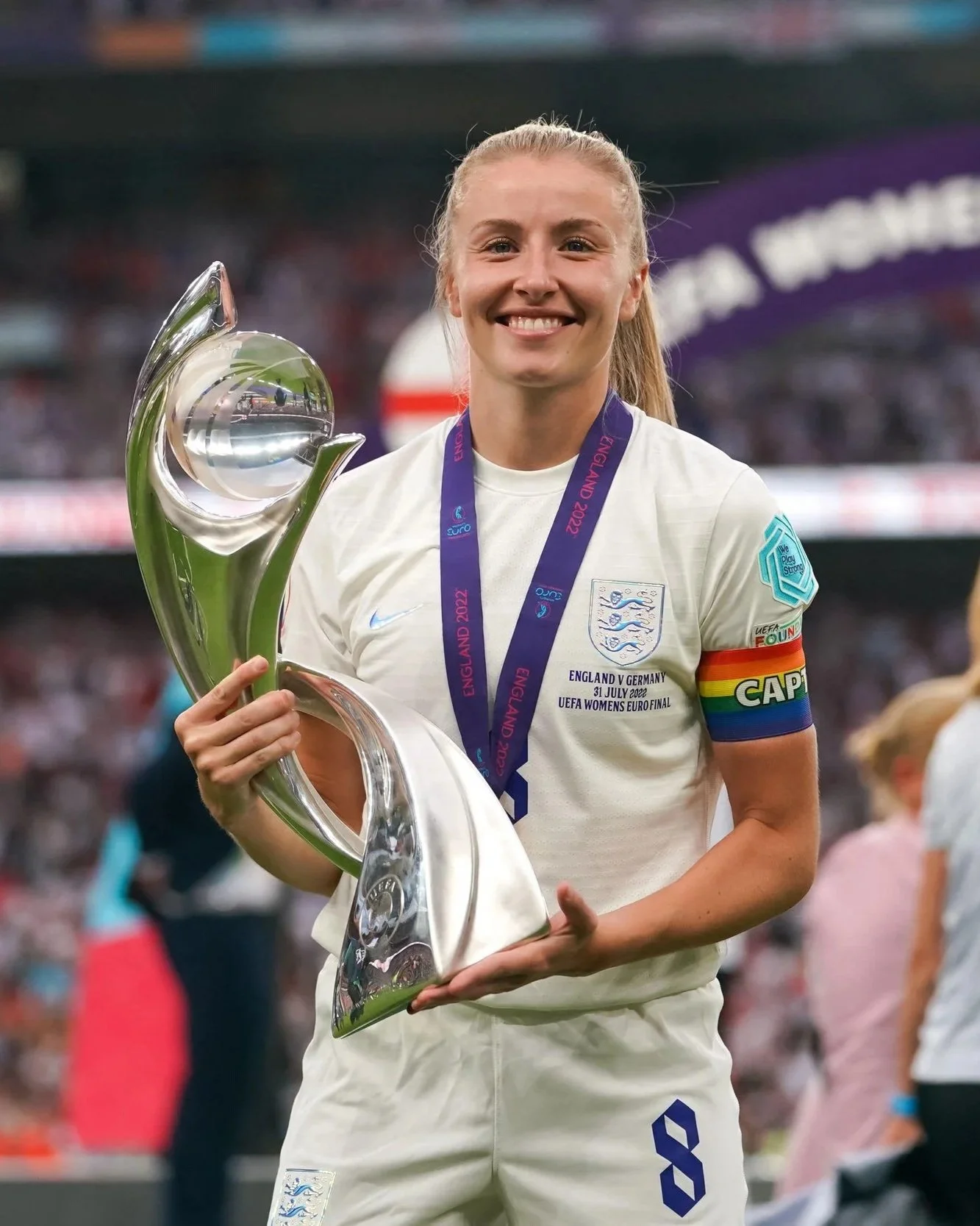
When England lifted the UEFA Women’s European Championship trophy at Wembley in 2022, Williamson stood proudly at the front of her teammates, becoming the first England captain since Bobby Moore in 1966 to lift a major international trophy. It was a moment that united the country, but it was also the reward for years of dedication that began in Milton Keynes, where a young girl with a football dreamed of representing the club she loved.
“I was one of those kids that always had a football with me.”
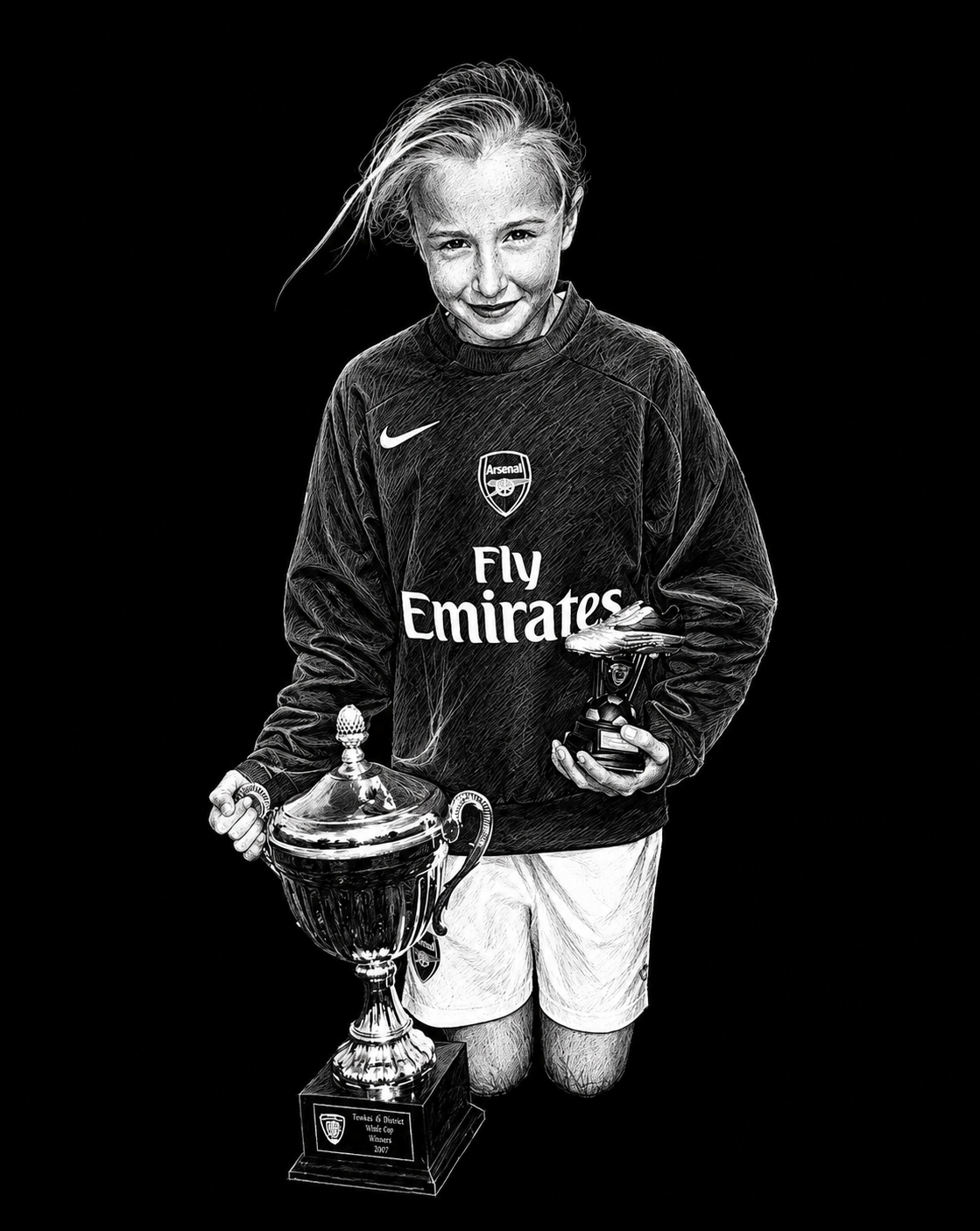
Born on 29 March 1997, Williamson developed her love for football from an early age. She often played alongside boys, an experience that sharpened both her technical ability and football intelligence. Football wasn’t just a hobby—it was part of who she was.
At just nine years old, Williamson joined Arsenal’s academy, beginning a journey that would define her career. Inspired by Arsenal legend Kelly Smith, whom she has described as her childhood hero, Leah immersed herself in the club’s philosophy of intelligent, possession-based football. Coaches quickly recognised her maturity, composure and natural leadership, qualities that set her apart from many players her age.
In 2006, before becoming an Arsenal player, she was selected as an Arsenal mascot for a League Cup match. Her mother drove a 430-mile round trip from their family holiday so she wouldn’t miss the opportunity.
After progressing through every level of the academy, Williamson made her first-team debut in 2014 at just 17 years old. Comfortable on the ball and capable of playing in both defence and midfield, she immediately showed the calmness that would become her trademark. Rather than simply defending, Williamson wanted to control matches, build attacks and lead by example.
Her performances soon earned recognition on the international stage. Having represented England throughout the youth ranks, she made her senior debut in 2018 and steadily established herself as one of the country’s brightest talents. It wasn’t long before a new England manager arrived—someone who immediately recognised that Williamson possessed not only world-class ability, but the leadership qualities capable of inspiring an entire nation.
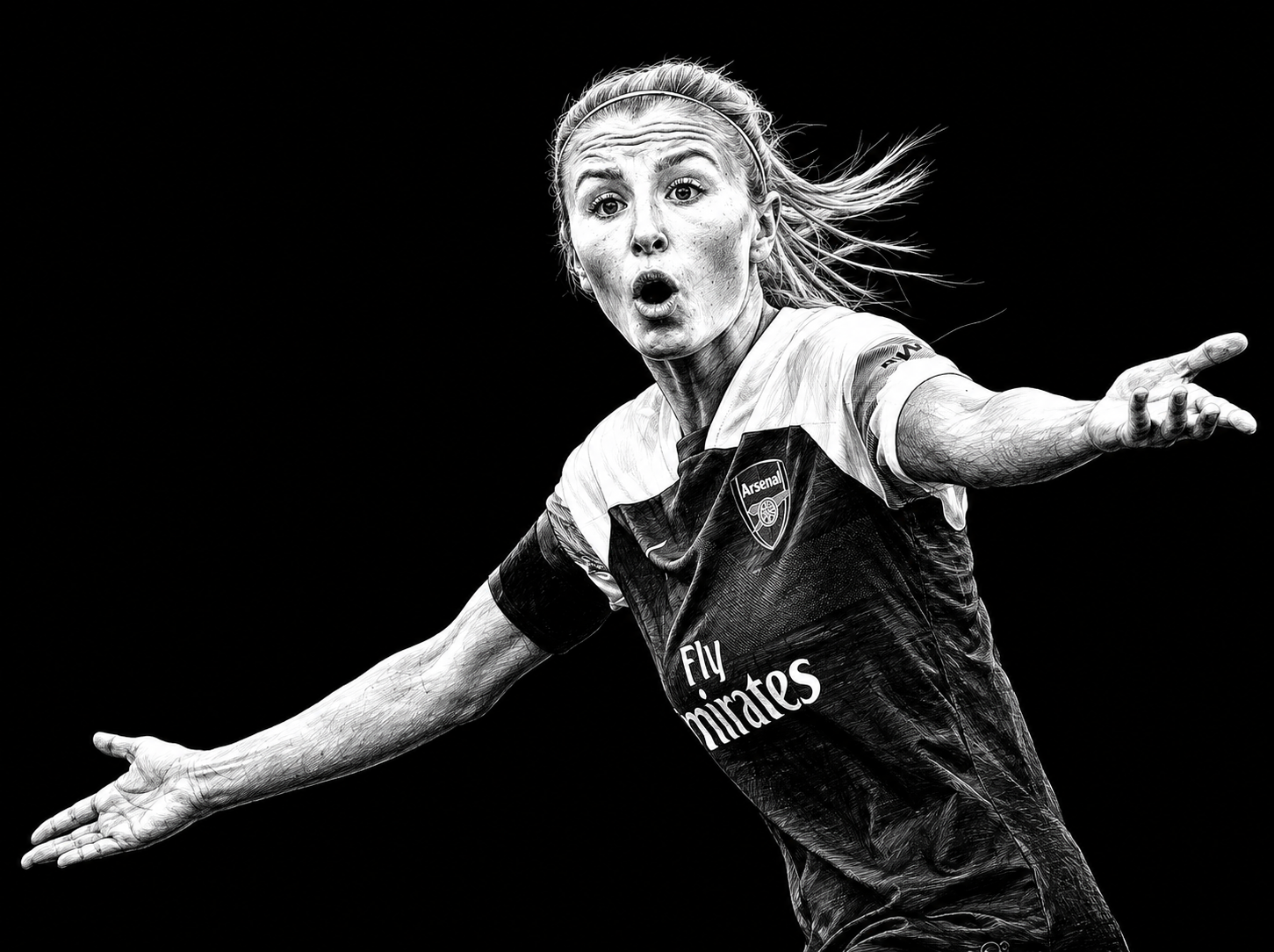
By the time Sarina Wiegman was appointed England manager in 2021, Leah Williamson had already established herself as one of the country’s most technically gifted defenders. Comfortable on the ball, calm under pressure and capable of playing in both defence and midfield, she possessed all the qualities of a modern centre-back. What Wiegman saw, however, was something even more valuable—a natural leader.
Only a few months into her reign, Wiegman made the bold decision to appoint Williamson as England captain ahead of the UEFA Women’s EURO 2022. It was a huge responsibility for a player who was only 25 years old, but Wiegman had complete faith in her.
“Leah connects people. She has a very good understanding of the game and brings calmness to the team.”
- Sarina Wiegman
Williamson accepted the honour with humility rather than excitement. She understood what wearing the armband represented, not just for her teammates but for an entire nation. Reflecting on her appointment, she described captaining England as “the biggest honour of my life.” Those words would take on even greater meaning just months later.
Leading a New Generation
The summer of 2022 marked a turning point for women’s football in England. Hosting the European Championship on home soil brought unprecedented attention to the Lionesses, but it also created enormous pressure. Expectations had never been higher.
Williamson never allowed those expectations to overwhelm her. Throughout the tournament she remained composed, leading by example rather than emotion. Whether defending against world-class forwards or calmly building attacks from the back, she became the heartbeat of England’s performances.
England’s defence proved almost impenetrable. Alongside Millie Bright, Williamson formed one of the strongest defensive partnerships in the tournament, conceding just two goals on their route to the final. Her ability to read the game, step confidently into midfield and organise the back line became one of England’s greatest strengths.
On 31 July 2022, more than 87,000 supporters packed Wembley Stadium for the European Championship final against Germany—a record attendance for any European Championship final, men’s or women’s. The match quickly became one of the most dramatic evenings in English football history.
When the final whistle sounded, Williamson sank to the ground in disbelief before embracing her teammates. England had ended a 56-year wait for a major international trophy. As captain, she climbed the Wembley steps and lifted the European Championship trophy into the London sky. The image instantly became one of the defining moments in English sporting history. UEFA later named Williamson in the Team of the Tournament, recognising her outstanding performances throughout the competition.
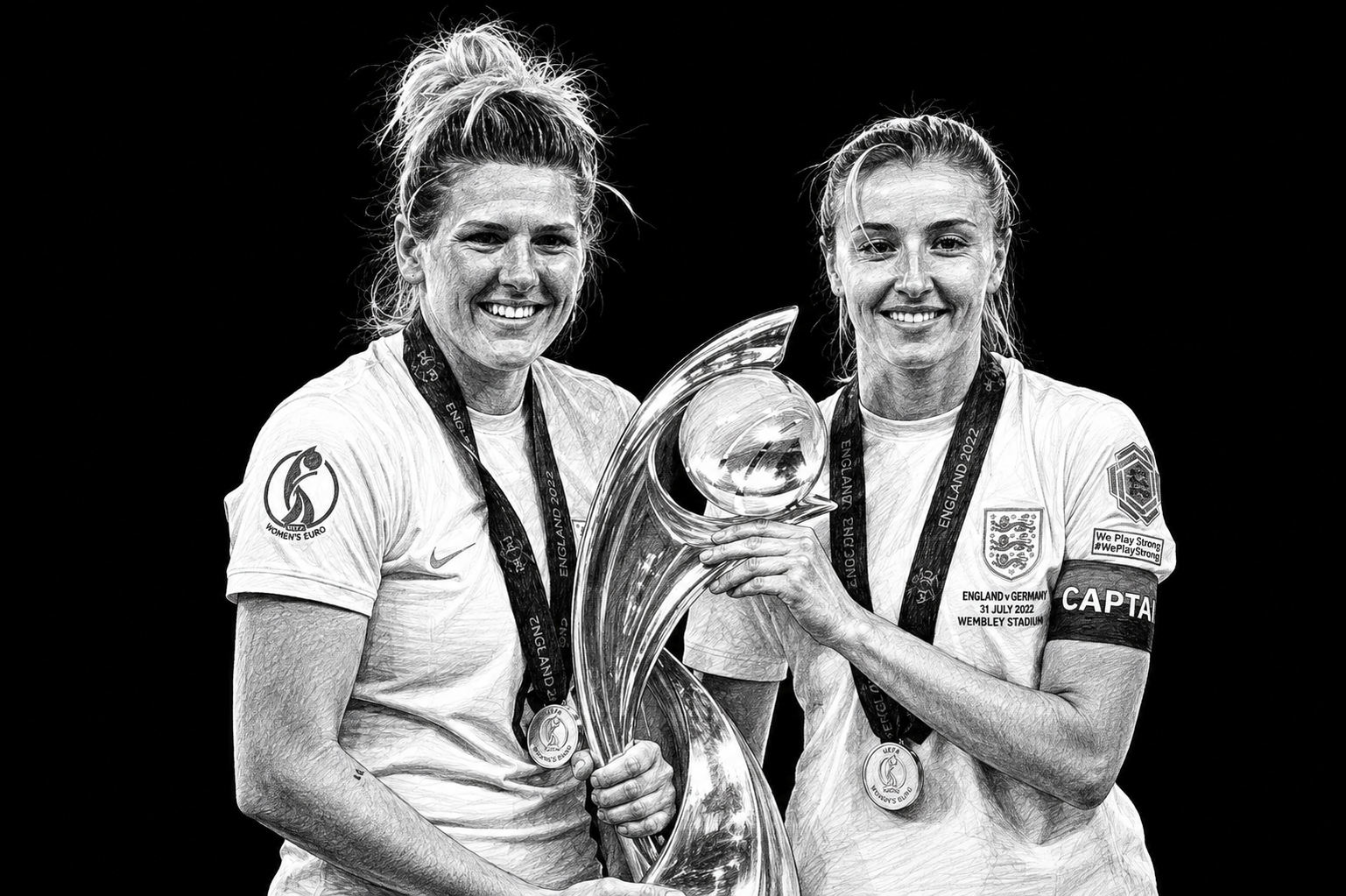
Winning the European Championship transformed Williamson into one of Britain’s most recognisable athletes. Yet despite the celebrations and media attention, she remained grounded.
She repeatedly used her platform to campaign for greater opportunities for girls in football, calling for equal access to school sport and improved facilities for future generations. Rather than focusing on personal accolades, Williamson consistently emphasised the responsibility she felt to leave the game in a better place than she found it.
Yet just as everything appeared to be falling perfectly into place, football reminded her how quickly fortunes can change. Less than a year after lifting the European Championship trophy at Wembley, Williamson faced the greatest challenge of her career—one that would test not only her body, but also the resilience that had defined her journey since childhood.
During Arsenal’s Women’s Super League match against Manchester United, Williamson collapsed after challenging for the ball. There was no heavy tackle, no obvious collision—just an awkward movement that immediately left her in visible pain. The diagnosis confirmed every athlete’s worst fear: a ruptured anterior cruciate ligament (ACL).
The injury ruled her out for the remainder of the season, the 2023 FIFA Women’s World Cup, and many months of rehabilitation.
“It was heartbreaking. Football has always been a huge part of my identity, so having that taken away was incredibly difficult.”
- Leah Williamson
The months that followed became the greatest mental challenge of Williamson’s career. Recovery from an ACL injury demands patience, resilience and countless hours of rehabilitation. Every small milestone—walking without pain, jogging again, touching a football—represented another step towards the game she loved.
Rather than hiding from the public, Williamson spoke openly about the emotional struggles of long-term injury. She hoped that by sharing her experiences, she could help other athletes facing similar setbacks.
Despite being unable to play, Williamson remained heavily involved with Arsenal. She regularly attended matches, supported teammates from the sidelines and continued acting as one of the club’s leaders. Her influence had never depended solely on what she produced during ninety minutes.
After almost a year away from competitive football, Williamson finally returned to action in 2024. The reception she received from Arsenal supporters reflected just how much she had been missed. Every tackle, every pass and every touch of the ball was greeted with huge applause.
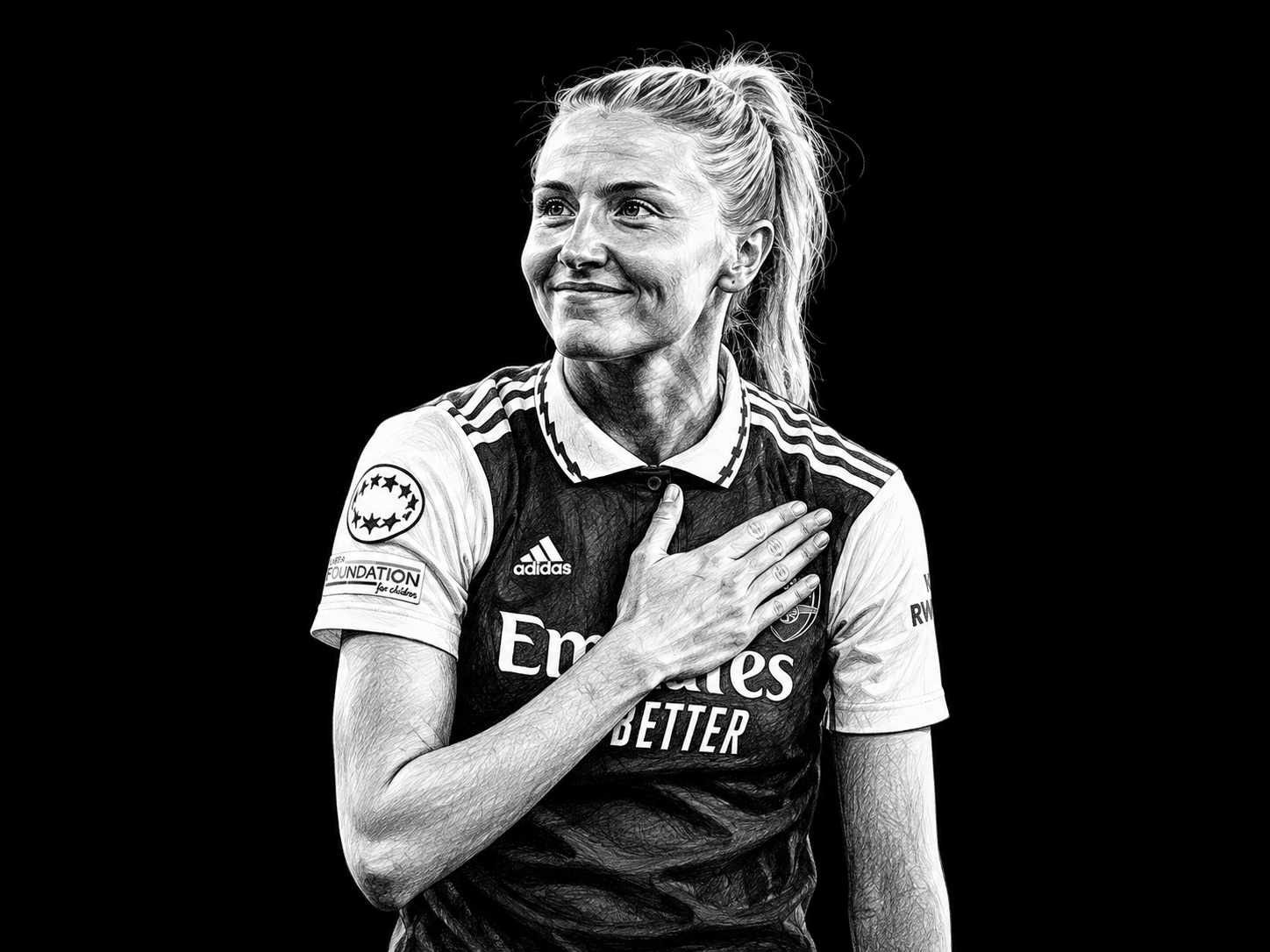
Leah returned to an Arsenal side determined to reclaim its place among Europe’s elite. Although carefully managed after such a long absence, Williamson’s presence immediately brought composure and leadership back to the squad. Her ability to organise the defence, dictate play from deep and remain calm under pressure reminded everyone why she had become one of the most respected defenders in world football.
Arsenal’s 2024/25 season was one of resilience, belief and unforgettable nights. Battling against some of Europe’s strongest teams, the Gunners reached the UEFA Women’s Champions League final, where they faced the mighty Barcelona—the best team in the world.
Barcelona had dominated European football for years, boasting some of the finest players ever to play the game. Yet Arsenal refused to be intimidated. Defensively disciplined and tactically outstanding, they frustrated the Spanish champions throughout the match.
In the 74th minute, substitute Stina Blackstenius scored the only goal of the game, a defensive masterclass followed and Arsenal were champions of Europe once again.
For Williamson, the victory carried even greater significance. Two years earlier she had lifted the European Championship trophy as England captain. Now, after fighting back from the most difficult injury of her career, she stood at the top of European club football. Reflecting on the achievement, Williamson described it as one of the proudest moments of her career, acknowledging the sacrifices made throughout her rehabilitation to return to the biggest stage.
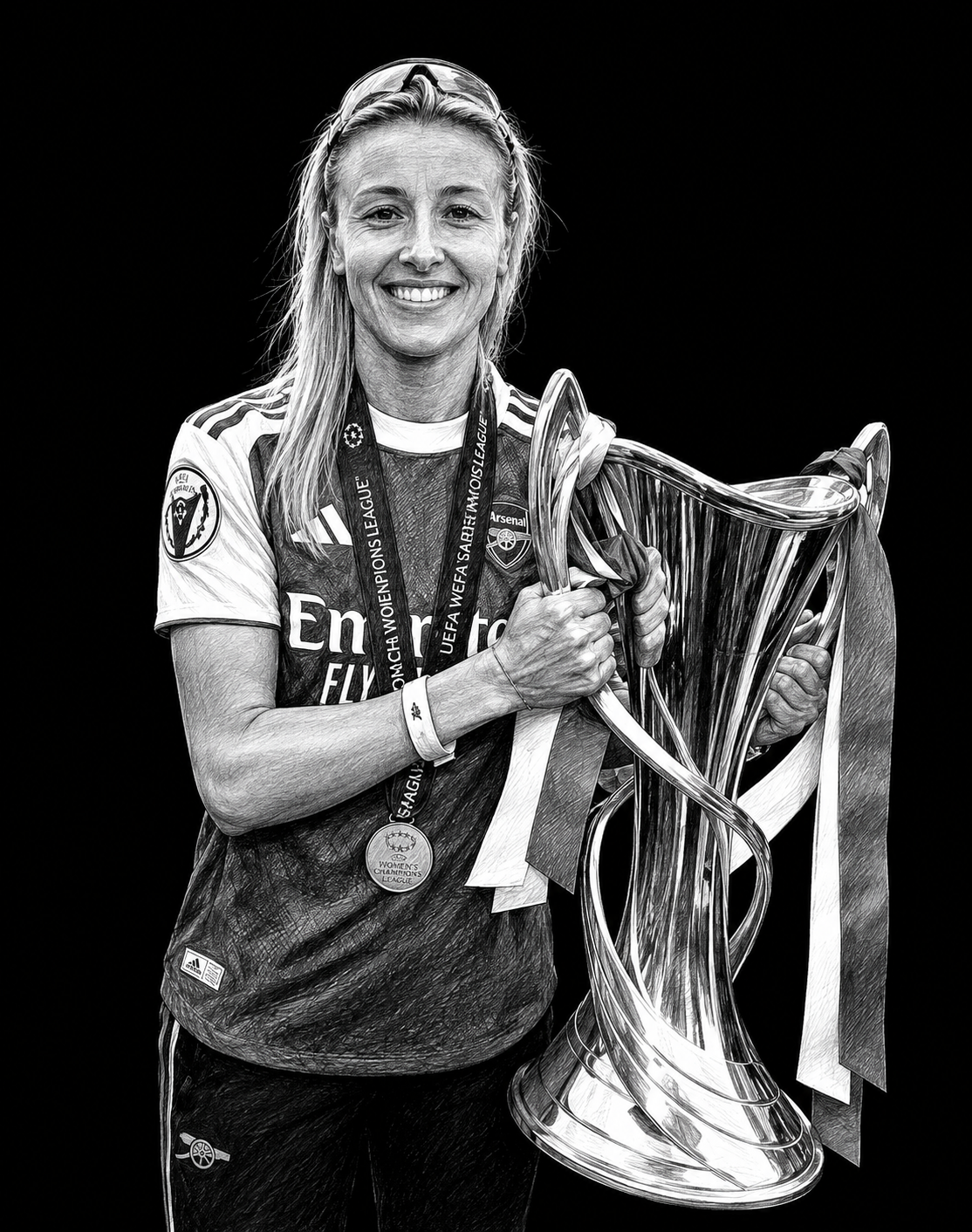
In 2025, Leah Williamson captained England to a second consecutive UEFA Women’s European Championship, defeating Spain in a dramatic penalty shootout after a 1–1 draw in the final. Leading with her trademark composure, Williamson became the first England captain to lift back-to-back major international trophies. Reflecting on the victory, she said, “Every single person showed up every time.” The triumph confirmed England’s place among Europe’s footballing elite.
Leah Williamson today is a inspiration for every girl who wants to play football, and proved to the world that anything is possible when you are determined enough to follow your dream.
Back-to-Back European Champions
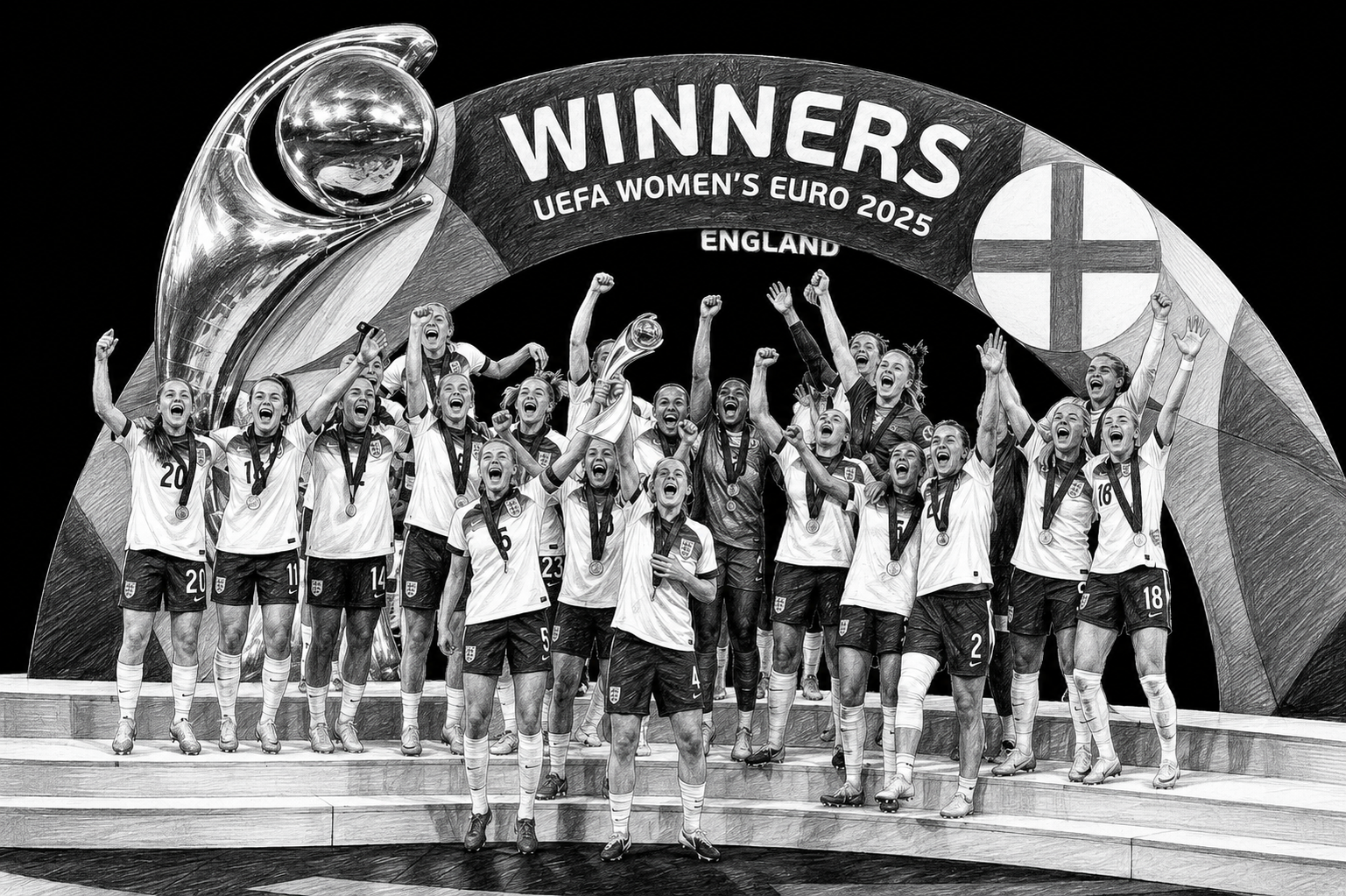
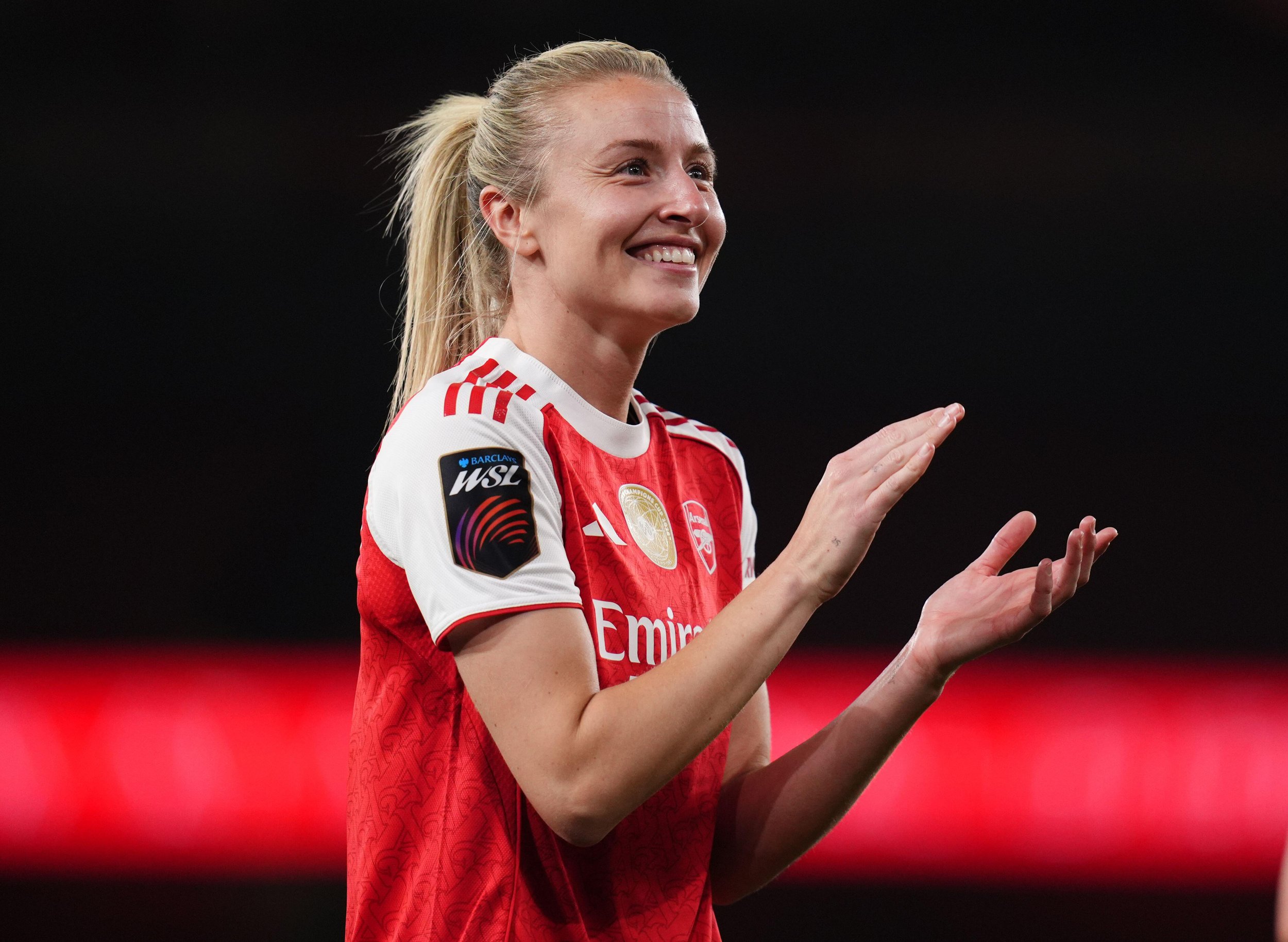
“We’ve changed society. We’ve brought everyone together, and that’s what this team has done.”
- Leah Williamson
John Walton | Alamy
“The biggest thing we can do is leave the game in a better place than we found it”
- Leah Williamson
Written by Miles Waldock