
Jérémy Jacquet
Country: France
Age: 21
Club: Liverpool
League: Premier League
Position: Centre back
Club History: Rennes, Clermont Foot (loan), Liverpool
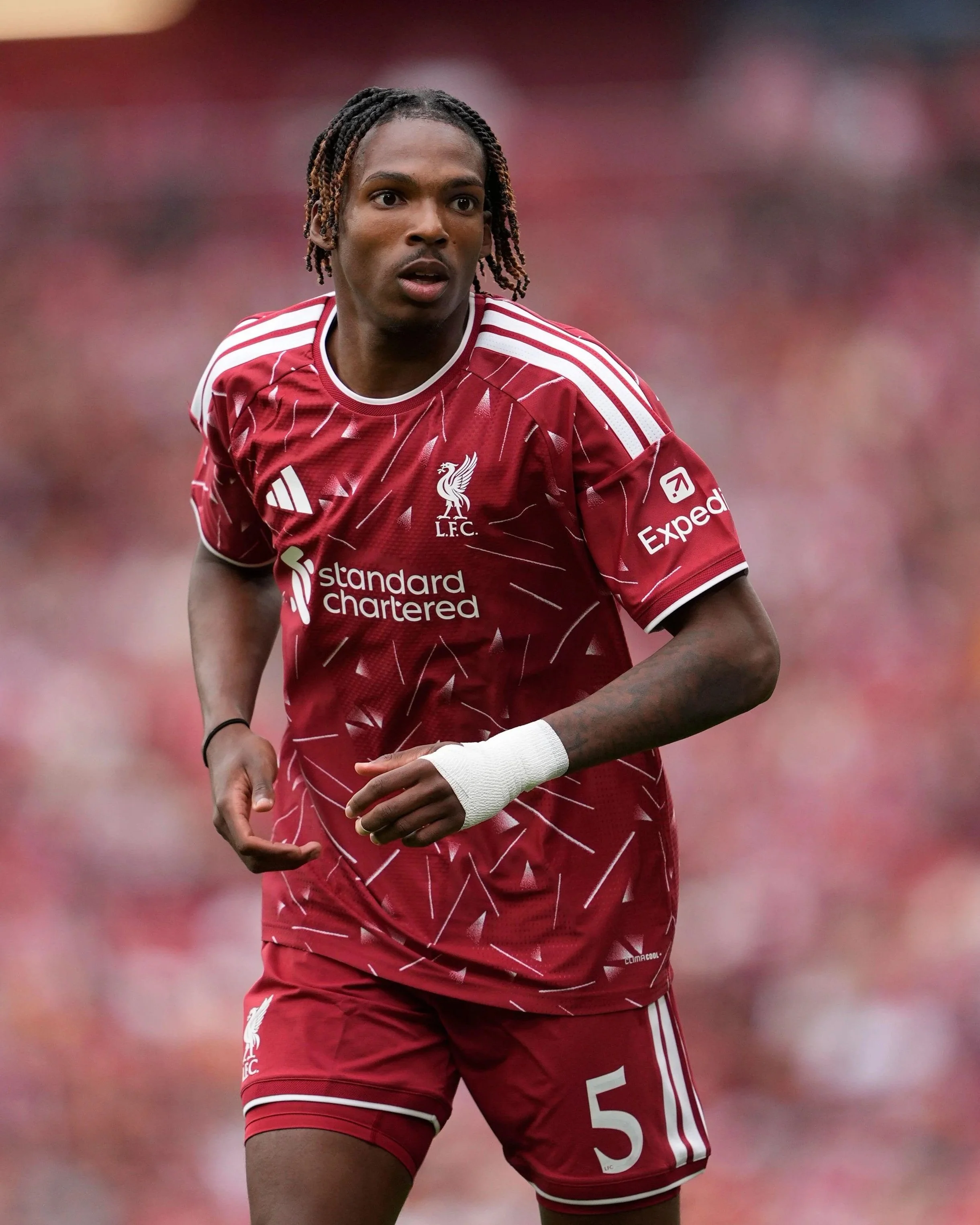
PA Images | Alamy
Before the aerial duels and the composed exits from the back, there was a boy in Bondy chasing a ball that always seemed a size too big for him. Jérémy Jacquet was born in that Parisian suburb in July 2005, carrying a Guadeloupean heritage in a household that measured success in patience, not headlines. His first footballing steps were modest by design — a neighborhood outfit called AS Outre Mer du Bois l'Abbé, then the tighter structure of RC Joinville, where a raw, undersized midfielder began sketching the outline of a footballer nobody had quite named yet.
Rennes came calling in 2019, and with it came the first real test of identity. Jacquet arrived as a central midfielder, a boy who thought in passes rather than headers. It was the club's scouts who saw something else entirely — height not yet caught up to frame, timing that suggested a defender in waiting. "Go play centre-back," they told him. He pushed back at first, reluctant to abandon the only role he'd ever known. They were right, and he knew it soon enough.
“When you’re young, the most important thing is to play. That came from me and my family. I’m calm on the ball, maybe I can look a bit nonchalant — but I’m focused. What defines me is playing out well, breaking lines with the right pass.”
- Jérémy Jacquet
What followed wasn't a smooth ascent but a body in open rebellion against itself. A sudden growth spurt turned adolescence into a minefield — his back gave out, then his heel, then his knee, and eventually a surgeon's table entered the story. Osgood-Schlatter disease, the cruel signature of teenage athletes outgrowing their own frames, kept compounding the damage.
Even his first trial at Rennes ended with a dislocated shoulder, as if his own body were testing whether he truly wanted this. He probably played ten matches in a year, but it made him stronger. The reserve-team stretch that came after wasn't glamorous, but it was where the pieces finally locked into place — where a boy built from setbacks started resembling the defender scouts once imagined.

Under Habib Beye, the pieces that had once been scattered across operating tables and reserve fixtures finally cohered into a first-choice centre-back. At 1.90m, he'd become someone defenders fear in the air — attacking the ball early, meeting it at its highest point, almost dictating the terms of an aerial duel rather than reacting to one. Calm on the ball to the point of looking nonchalant, he insisted the stillness was concentration, not indifference. France's youth setup noticed too, handing him the captaincy at U20 level and, eventually, a place with the U21s.
“It was either stay at Rennes with little playing time or go and discover something new. I chose minutes on the pitch — and it paid off. My career start is quite original — and I’m proud of it.”
“I know my potential. I want to play my football and enjoy the moment. I’m going to follow my own path and I don’t know how it will end, but I think I’m off to a good start and I want to play as much as possible and prove myself on the pitch. I have no doubt that things will go well.”
By the time Jacquet finally strung together a full season with the reserves, Rennes had a decision to make about a player they'd once nearly lost to his own growing pains. On 1 January 2024, he was promoted to the first team, given the unglamorous number 97 and a place among senior professionals who had none of his scar tissue. Weeks later came a move that raised eyebrows across Ligue 1: a loan to Clermont Foot, a club fighting relegation rather than chasing silverware. It was either stay at Rennes with scraps of playing time or go and discover something new, he'd later explain. Clermont went down that season, but Jacquet didn't go down with them — he played, he learned, and he came back to Rennes a better version of himself.
Then, in 2026, came the move that turned a Ligue 1 curiosity into a Premier League proposition: Liverpool. For a club assessing risk as much as talent, Jacquet's file read less like a red flag and more like proof of concept — a player who had already survived the worst his own body could throw at him and kept climbing anyway. He wasn't the finished product Anfield inherited. He was the boy from Bondy who'd been told to change positions, dislocated a shoulder proving himself, and refused every invitation to quit.
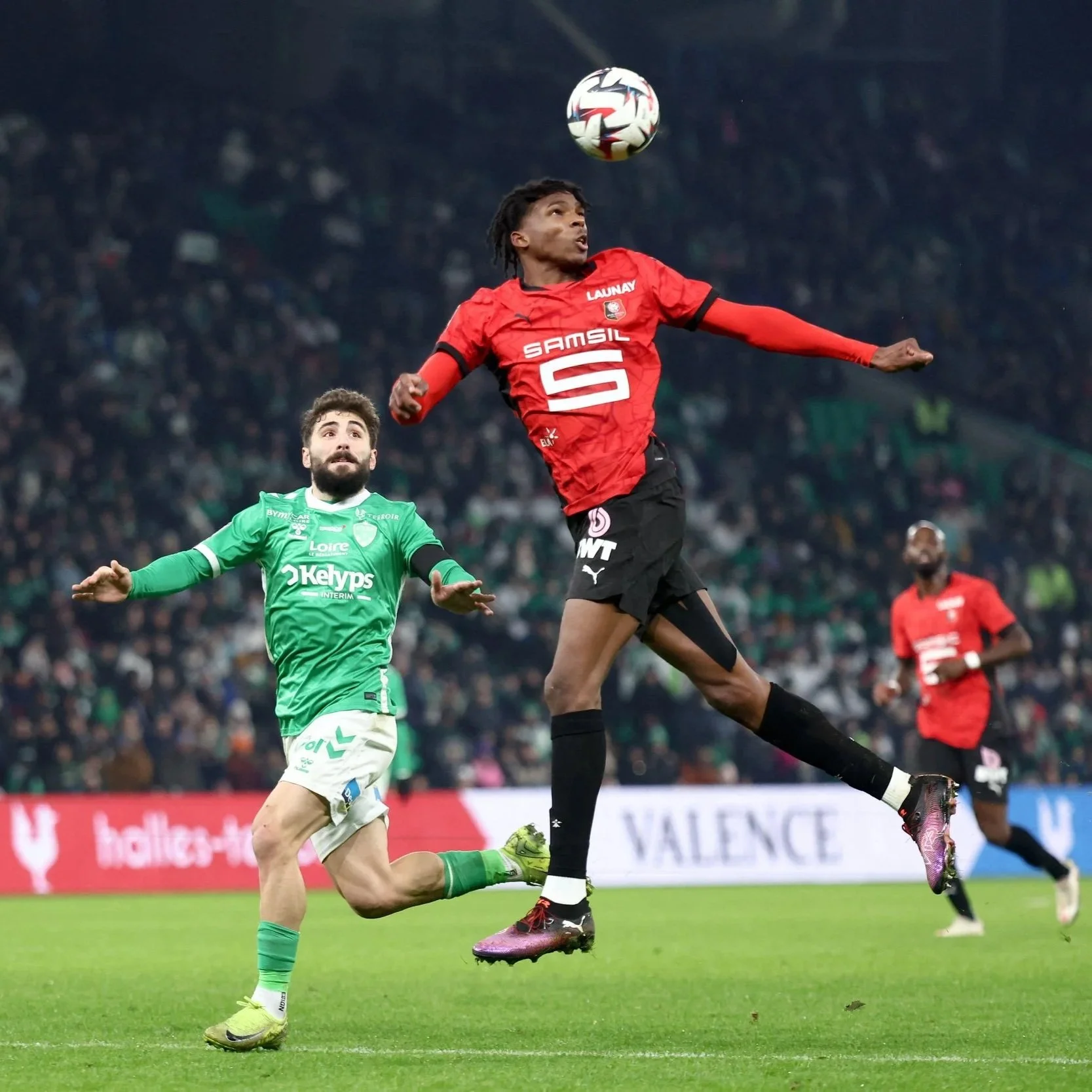
Icon Sport | Alamy
Written by Danial Dar